
If you’re trying to make content for everyone on TikTok, you’re setting yourself up to be ignored. The single biggest key to unlocking growth is to stop thinking broad and start thinking niche. It's a shift from shouting into a crowd to having a meaningful conversation with a small, deeply engaged group. This is what makes your content go from just another video in the scroll to something people can't miss.
Why Nailing Your Niche Is Non-Negotiable on TikTok
TikTok is built on hyper-specific trends and countless micro-communities. Casting a wide net here is the fastest way to become invisible to the algorithm. When your message is too broad, it feels generic and urgent to absolutely no one. You end up making content for a hypothetical "everyone" that doesn't actually exist.

This is where knowing your target audience becomes your secret weapon. Instead of churning out bland content, you can create videos that hit on a specific person's pain points, passions, and sense of humor. The TikTok algorithm is smart—it sees this specific engagement and rewards it by pushing your content to more people who fit that exact profile.
The Power of a Focused Audience
Let’s get practical. A video about "general fitness tips" might get a few passive views. It's okay, but it's forgettable.
Now, what about a video on "five-minute post-workout stretches for busy moms"? You're solving a real problem for a specific group. That's the kind of content that sparks saves, shares, and comments from an audience that finally feels understood.
The numbers don't lie. As of 2025, TikTok has roughly 1.59 billion monthly active users around the globe. Dig a little deeper, and you’ll find that over 70% of them are between 18 and 34 years old. When you start slicing that massive audience by age, location, and gender, you stop guessing and start creating content designed for the people most likely to watch, engage, and ultimately, buy. For a closer look at the data, you can explore some more detailed TikTok statistics to really see who these users are.
The goal isn't to be seen by millions of the wrong people. It's to be loved by thousands of the right ones. A smaller, dedicated audience is infinitely more valuable for long-term growth than a massive, passive one.
This targeted approach is also why tools like Viral.new are so effective. Instead of giving it a vague prompt, you can feed the AI precise audience details, like "skincare enthusiasts in their late 20s struggling with hormonal acne." The system then generates trend-aligned ideas already dialed into that specific viewer, giving your content a much better shot at landing on the right For You Page.
Uncovering Audience Clues in Your Data and Competitor Content
Before you can chase down your ideal audience, you have to get real about who you’re already reaching. The smartest place to start this whole process is right in your own backyard—the data you already have. Your own analytics and your competitors' content are packed with clues.

Don't worry, this isn't about becoming a data scientist overnight. It's more like being a detective. You're simply gathering the evidence that will help you build a solid profile of your future fans.
Digging into Your TikTok Analytics
Your first stop should always be your own TikTok Analytics dashboard. This is ground zero for an unbiased look at who is actually watching your videos right now. The results might even surprise you.
To get a quick but powerful snapshot, focus on these three areas:
- Follower Demographics: Jump over to the "Followers" tab. Here, you'll find the age ranges, gender split, and top locations of your audience. Is this the crowd you thought you were talking to, or has an unexpected group taken an interest?
- High-Performing Content: Filter your videos from the last 28-90 days to see which ones got the most views, shares, and comments. What topics did they cover? What formats or sounds did you use? These are clear signals of what’s already working.
- Audience Behavior Metrics: This is huge. Look closely at Average Watch Time and Completion Rate. When a specific video has a high completion rate, it means you held people's attention—a massive win for the TikTok algorithm.
If you want to go deeper into what these numbers really mean, check out our complete guide on how to read your TikTok Creator Analytics. It'll help you turn that raw data into a real content strategy.
Identifying your target audience is about more than just who they are; it's about what they do on the platform. Your data reveals the behaviors—like watching tutorials to the end or saving product demos—that signal genuine interest.
Globally, TikTok has evolved into a powerful discovery engine, moving far beyond just entertainment. This shift is critical when you realize that more than half of US TikTok users are in the 18-34 age group, a demographic with high purchase intent. When you understand what actions your audience takes, you can create content that meets them where they are. You can find more data-driven insights on TikTok user trends from Backlinko.com.
Analyzing Your Competitors' Audience
Okay, once you have a handle on your own data, it's time to look over the fence. Sizing up your competitors is a fantastic shortcut to understanding what already clicks with your target audience. The goal isn't to copy them—it's to gather intel.
Start by picking out three to five direct or aspirational competitors. These are the accounts that are already killing it with the exact audience you want to attract.
Here’s what to look for when you're doing your recon:
- Dissect the Comment Sections: Honestly, comments are a goldmine. What questions keep popping up? What frustrations are people venting about? This is raw, unfiltered feedback you can use to build your own content plan.
- Identify Most-Shared Videos: Hunt for their videos with the highest share counts. A share is a powerful vote of confidence. It means someone found the content so valuable they were willing to stake their own reputation on it by sending it to a friend.
- Spot Content Gaps: Pay close attention to what they aren't talking about. Are there questions in the comments that go unanswered? Are people asking for topics they just aren't covering? That's your opening. You can be the one to step in and fill that void.
All that data you've gathered—the analytics, competitor deep-dives, and social listening—is just a pile of numbers until you give it a human face. This is the moment where you breathe life into the data, turning abstract insights into a tangible, relatable person. Building an audience persona is how you bridge that crucial gap between knowing what your audience does and truly understanding who they are.

Think of a persona not just as a list of demographics, but as a detailed, semi-fictional profile of your ideal customer. It’s got a name, goals, frustrations, and real motivations. This profile becomes your North Star, making sure every single piece of content you create is designed to speak directly to an individual, not a faceless crowd.
Once you have a clear persona in your mind, content creation gets so much easier. Instead of asking, "What should I post today?" you'll find yourself asking, "What would Camila find useful, funny, or inspiring right now?" It’s a subtle shift, but it leads to content that resonates on a much deeper level.
Moving Beyond Basic Demographics
The real magic of a persona happens when you dig into the psychographics—the values, attitudes, and lifestyle choices that actually drive their behavior. This is how you connect with your audience on a level your competitors aren't. Sure, knowing your audience is 24 years old is helpful, but knowing they value sustainability and feel overwhelmed by complicated ingredient lists? That's gold.
To get started, zero in on these key areas:
- Values & Beliefs: What do they stand for? Do they prioritize ethical sourcing, affordability, or a touch of luxury? Understanding their core values helps you align your brand’s messaging perfectly.
- Pain Points & Frustrations: What problems are they trying to solve in their daily life? This could be anything from finding vegan makeup that actually lasts to dealing with stubborn, acne-prone skin.
- Goals & Aspirations: What are they working towards? Maybe they want to master a "no-makeup" makeup look or build a more conscious beauty routine from scratch.
- TikTok Behavior: How do they actually use the app? Are they saving tutorials for later, following creators for brutally honest reviews, or jumping on the latest viral challenge? This tells you exactly what content formats will stop their scroll.
A great persona makes you feel like you're creating content for a friend. It humanizes your strategy, turning cold data into a clear picture of the person you’re trying to help, entertain, or inspire.
This attention to detail is what separates decent content from unmissable content. For example, recent studies have shown that brands focusing their social media strategy on a well-defined audience often see 2–3 times higher engagement. That’s the direct result of creating content that speaks to specific psychographic needs instead of just casting a wide net over a demographic bucket. It’s not just about who they are, but why they care.
Building a Persona From Scratch: An Indie Beauty Brand Example
Let's make this real. Imagine you run an indie beauty brand selling vegan, cruelty-free skincare. Your research has uncovered a super-engaged segment of young, environmentally-conscious consumers. By combining your findings with insights from a thorough TikTok competitor analysis, you can build a living, breathing persona.
This template can help you organize all your research into a clear, actionable profile. Let's use it to bring "Conscious Beauty Camila" to life.
Audience Persona Template Example: 'Conscious Beauty Camila'
| Attribute | Description for 'Conscious Beauty Camila' |
|---|---|
| Name & Photo | Camila (24) - Use a stock photo to make her feel real. |
| Demographics | Gen Z, living in a major city (e.g., Austin), working in a creative field like graphic design. Annual income around $55k. |
| Values | Sustainability, ethical production, ingredient transparency, and supporting small businesses. Actively avoids brands that test on animals. |
| Pain Points | Feels overwhelmed by "greenwashing" from big brands. Struggles to find effective skincare that aligns with her values and budget. Finds most beauty tutorials overly complicated. |
| Goals | To build a simple, effective skincare routine with products she can trust. Wants to feel confident in her skin without wearing heavy makeup. |
| TikTok Habits | Follows micro-influencers for authentic reviews. Saves "get ready with me" videos and tutorials for minimalist looks. Engages with content that educates on ingredients or brand ethics. |
| Content She Loves | Short, aesthetic videos showing product textures. Behind-the-scenes looks at how products are made. Quick tips on how to read an ingredient label. |
With "Camila" as your guide, your content strategy suddenly snaps into focus. You know you need to create videos that are educational but simple, highlight your brand's ethical sourcing, and use a tone that feels authentic and trustworthy. You’re no longer just selling skincare—you’re helping Camila solve her specific problems and achieve her personal goals.
Finding Content Gold Through Active Social Listening
While analytics and personas give you a solid framework, the real magic happens when you see how your audience acts in their natural habitat. This is the heart of social listening—tuning into the raw, unfiltered conversations people are already having about their problems and passions.
Think of it less like an interrogation and more like being a fly on the wall in their digital hangouts. You’re trying to catch not just what they talk about, but how they talk about it. What exact words do they use to vent their frustrations? What inside jokes keep popping up? This is the language you need to adopt to make your content feel like it truly gets them.
Tapping into TikTok’s Conversation Layer
TikTok is basically a giant, real-time focus group, as long as you know where to listen. The platform's search bar is your best friend here. Don't just search for broad industry keywords; get inside your audience's head and search for the problems they're actively trying to solve.
Let’s say you’re a sustainable fashion brand. You could search for “#sustainablefashion,” sure. But the real insights come from searching for phrases your potential customers are actually typing in:
- “How to build a capsule wardrobe”
- “Thrift store finds”
- “Clothes that last forever”
- “Stop buying fast fashion”
When you search these terms, don't stop at the top videos. The comment section is where the gold is buried. This is where you’ll find follow-up questions, shared frustrations, and genuine recommendations from real people. Look for patterns in their language and the pain points they keep mentioning.
Social listening is about capturing the exact phrasing your audience uses. When your content uses their words, it feels less like an ad and more like a conversation they were already having in their head.
This approach helps you uncover the "why" behind what people do. You might see a comment like, "I want to stop buying fast fashion but everything ethical is so expensive." Boom. That’s a direct signal from your audience. You can turn that right into a video titled "3 Ways to Afford Ethical Fashion on a Budget," hitting a pain point you know is real.
Exploring Adjacent Digital Communities
Remember, your audience doesn't live exclusively on TikTok. They're scattered across the internet in niche communities where they feel safe enough to get real about their interests and problems. Finding these spots on platforms like Reddit or Discord can be a game-changer.
Ask yourself: where would my ideal customer go to ask for advice or geek out about their hobbies?
- Reddit: Subreddits are hyper-focused communities. For that sustainable fashion brand, you'd be quietly observing conversations in places like r/femalefashionadvice, r/capsulewardrobe, and maybe even r/Anticonsumption.
- Discord: Many creators and communities have their own private Discord servers. A quick search can reveal servers dedicated to your niche, giving you a live look at how enthusiasts connect.
- Facebook Groups: Don't sleep on Facebook Groups. They are still a major hub for dedicated communities built around specific lifestyles, hobbies, or challenges relevant to your brand.
By spending time in these spaces, you’re doing more than just collecting data—you’re building empathy. You start to see the world from their perspective, which is the single most valuable asset you can have as a creator. You’ll also pick up countless tips for refining your strategy; our guide on TikTok social listening has some more advanced techniques for this.
This deep listening is what separates generic content from content that feels incredibly personal and timely. You're no longer guessing what your audience wants to see. They've already told you, loud and clear. Your job is just to listen and create something that helps.
Time to Test Your Assumptions with Smart Content Experiments
Everything you've done—the research, the analysis, the persona-building—has led you to an educated guess. That’s all a persona is at this stage, no matter how detailed: a well-researched hypothesis. Now it's time to put it to the test.
Think of your TikTok account as your own private validation lab. We're not chasing viral hits right out of the gate. The real goal is to get clear, actionable feedback that either confirms you're on the right track or tells you it’s time to rethink things. You're going to use a few strategic content experiments to see if your ideal audience actually bites.
It’s like being a scientist. Each video you post is an experiment designed to answer a specific question. Does "Conscious Beauty Camila" really care more about ethical sourcing than she does about a product's aesthetic? Does she want quick tips or would she rather sit through a detailed tutorial? The data holds the answers.
Designing Your Content Validation Framework
The best way to see if your persona holds water is to create a small batch of videos. I'm talking just three to five clips, each designed to probe a different angle of your hypothesis. This keeps you from getting mixed signals. Instead of just throwing spaghetti at the wall to see what sticks, you’re being deliberate.
Let's go back to our indie beauty brand trying to reach "Conscious Beauty Camila." A solid test batch would look something like this:
- The Pain Point Video: Create a clip that speaks directly to a frustration you uncovered in your research. For Camila, that might be a video titled, "Tired of those 10-step routines? Here’s a 3-step minimalist glow." This directly tests whether her desire for simplicity is a real hook.
- The Core Value Video: This piece needs to hit on one of your persona's core values. A behind-the-scenes video showing how you ethically source a key ingredient would test if Camila’s stated commitment to sustainability actually drives engagement.
- The Niche Interest Video: This one should target a specific hobby or behavior you've pinned to your persona. Maybe a video on, "How our serum holds up under makeup through a full day of Zoom calls," which speaks directly to her life as a remote creative professional.
By building your content around these specific pillars, you're creating a controlled experiment. When one video clearly outperforms the others, you get a powerful signal about what truly makes your target audience tick.
Look Beyond Views to the Metrics That Really Matter
When you're in this testing phase, vanity metrics like view count can be incredibly misleading. A video can rack up millions of views for all the wrong reasons, pulling in a broad, totally irrelevant audience. To genuinely validate your persona, you have to dig into the metrics that signal a real connection.
These are the numbers that tell you a story about who is watching and why they give a damn.
A "save" is one of the most powerful signals on TikTok. It means someone found your content so useful that they plan on coming back to it later. It’s a direct sign that you've solved a problem or provided genuine value for your target audience.
Focus your analysis on these deeper engagement metrics. They offer the kind of qualitative feedback a simple view count never will.
Key Metrics for Validating Your TikTok Audience
Use these metrics to determine if your content is truly resonating with your hypothesized target audience during your testing phase.
| Metric | What It Tells You About Your Audience |
|---|---|
| Shares | A high share count means your content is so relatable or valuable that people are willing to attach their own name to it by sending it to friends. It confirms your messaging is hitting a nerve. |
| Saves | This is a huge signal of utility. People save tutorials, tips, and inspiring ideas for later. It proves you’re creating content that serves a real need for your persona. |
| Comment Sentiment | Don't just count the comments—read them. What are people actually saying? Are they asking smart follow-up questions? Tagging friends who would love it? Sharing their own stories? This qualitative data is gold. |
| Completion Rate | A high completion rate shows you held your audience's attention all the way through. This signals to the algorithm that your content is engaging and directly validates that your topic and format are compelling. |
After you've run your 3-5 test videos, look at the performance through this lens. If the "Pain Point" video is getting tons of saves and comments asking for more, you've struck a chord. If the "Core Value" video gets crickets, maybe that value isn't the primary motivator you thought it was. This is the feedback loop that helps you turn a rough sketch of your audience into a crystal-clear, data-backed portrait.
Turning Audience Insights into Sustainable TikTok Growth
Figuring out who your target audience is isn't a one-and-done task you can check off a list. It’s a living, breathing process. Think of it as a continuous cycle of listening, creating, and tweaking your approach based on what you learn. Every part of this playbook—from digging into your analytics to building out a persona and testing your assumptions—fuels the next. This creates a powerful feedback loop that's the secret to real, sustainable growth on TikTok.
Your detailed persona is the single most valuable tool you'll build in this entire process. It stops you from just guessing what to post and turns content creation into a focused, strategic activity. Whether you're brainstorming ideas over coffee or getting a jumpstart with an AI tool like Viral.new, that clear persona keeps you honest. It ensures every single video is made with a real person in mind. That's what separates forgettable content from content that actually builds a loyal community.
The Cycle of Audience Validation
When it comes down to it, your success on TikTok is built on a simple, repeatable loop: make an educated guess about your audience, create content to test that guess, and then dive into the feedback to sharpen your understanding. This is how you stop theorizing and start building a strategy that's grounded in reality.
This simple flow is the essence of validating your audience insights.
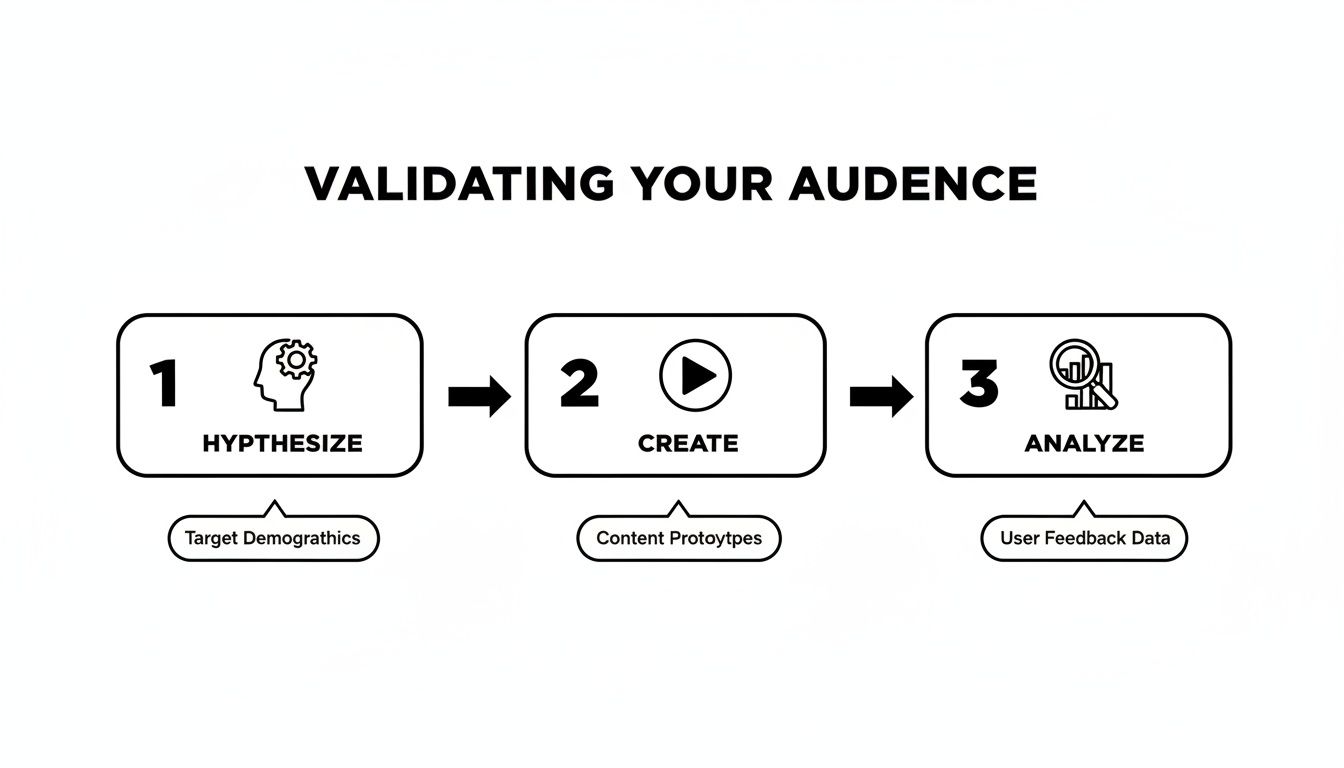
The big idea here is that each step informs the next. Over time, this process builds a smarter, more effective content engine.
Don’t fall into the trap of analysis paralysis. The goal isn't a perfect theory—it's a "good enough" hypothesis that you can start testing now. The data you get from real-world content experiments will always be more valuable than endless research.
So, where do you start? The first move is usually the easiest. Begin by auditing your current analytics to see who’s already paying attention. From there, you can get to the fun part: building a content strategy that doesn't just reach people, but truly connects with them and drives the results you're looking for.
Common Questions & Quick Answers
Even with the best playbook, you're bound to run into a few tricky situations when you're in the trenches trying to define your audience. Here are some of the most common questions that pop up, along with my straight-to-the-point answers.
How Often Should I Revisit My Audience Personas?
Think of your personas as living documents, not something you create once and file away. You should be giving them a solid review and refresh at least every 6–12 months.
Of course, some events will trigger an immediate reassessment. If you're launching a new product, overhauling your content strategy, or a platform algorithm goes through a major shake-up, it’s time to check in and see if your audience's behavior has shifted. Your audience is always evolving, and so should your understanding of them.
What If My Analytics Point to a Totally Unexpected Audience?
First off, don't panic. This happens all the time, and it's often a hidden gift. If your data shows a demographic you never intended to target is loving your stuff, don't just dismiss it.
My advice? Lean into it. Create a secondary persona for this surprise group and start running some small, targeted content experiments just for them. You might have just stumbled upon a super-receptive and underserved niche that could be even more valuable than the audience you were originally chasing.
Is It Okay to Have More Than One Target Audience?
Yes, one hundred percent. In fact, most successful brands do. It's pretty rare for a business to cater to just a single, monolithic customer type.
The trick is to create a distinct, detailed persona for each core segment. For example, a meal-prep service might target both "Time-Crunched Young Professionals" and "Health-Conscious Parents." Each has completely different motivations, pain points, and daily schedules, so you can't talk to them with the same generic message.
Here's the bottom line: The goal isn't to find one single, perfect audience. It's about clearly defining the most important groups you serve so you can craft content that genuinely connects with each of them. That's how you build a powerful, multifaceted brand.
Ready to stop the guesswork and start making content that actually resonates? Viral.new sends you fresh, trend-inspired TikTok ideas every single day. Get your first batch of AI-powered video ideas now.
