
TikTok trends for businesses are no longer just a reach tactic. TikTok Shop generated $33.2 billion in global gross merchandise value in 2024, more than doubling year over year, while one industry estimate put U.S. TikTok shopping at $32 million per day that year, according to TikTok Shop commerce data. A trend can now introduce a product, answer a buying question, build trust, and create a path to conversion inside the same viewing session.
Businesses don't need to copy every viral moment. They need repeatable formats that connect trend behavior with a specific business goal, whether that's earning attention, demonstrating expertise, showing proof, involving a community, or generating a sale. The strongest TikTok trends for businesses are useful because they give a team a production decision, not just an idea to imitate.
The ten formats below are organized by the job they perform in a marketing system. Each one includes a practical adaptation, its main trade-off, and a ready-to-shoot prompt. Use this list alongside a cinematic content playbook when you need to turn a broad concept into a stronger visual treatment. If your team struggles to keep pace, Viral.new is another option for turning niche and audience context into daily, trend-aligned video ideas.
1. Hook-First Content Structure
A useful TikTok video can still fail if the opening gives viewers no reason to stay. Hook-first content puts the visual proof, tension, question, or benefit before the explanation, so the audience understands immediately why the next moment deserves attention.
A home-improvement retailer might open with a close-up of a wall covered in failed paint samples before explaining the mistake. A software company could begin with a cluttered dashboard and the line, “This report took our team all afternoon.” A local restaurant might show the finished dish breaking open before revealing how it was prepared.
The hook should create curiosity without making a promise the video can't support. “You've been doing this wrong” can work for a product correction, but it damages trust if the correction is trivial or exaggerated. A benefit-led opening is often safer for regulated, technical, or high-consideration categories.
Build a hook testing habit
Don't change the entire video every time you test an opening. Keep the core demonstration similar while varying the first visual or sentence. That gives you a clearer view of whether the hook is helping the message earn attention.
Useful hook families include:
- Curiosity: Reveal an unexpected mistake, result, or overlooked detail.
- Contrast: Show the before state beside the improved state.
- Specific benefit: State the task the viewer will learn or complete.
- Audience tension: Name a problem that a particular customer recognizes.
- Visual interruption: Start with motion, a close-up, a reveal, or an unusual setting.
For more practical variations, use these TikTok hooks examples. A ready-to-shoot prompt is: “Film three openings for the same product demo, one showing the problem, one stating the benefit, and one asking a customer question. Keep the strongest opening and publish the demonstration with captions.”
2. Behind-the-Scenes and Process Videos
Customers often see the promise of a business before they see the work that makes the promise credible. Behind-the-scenes content closes that gap by showing preparation, quality control, decision-making, service delivery, or the people responsible for the finished result.
An online stationery shop can film an order moving from selection to packing, including the moment a team member checks the print quality. A restaurant can show the morning ingredient preparation, not just the plated meal. A consultant can record how a client workshop is structured, while removing confidential information. These scenes make an unfamiliar business easier to understand.
The format works best when it reveals a meaningful process rather than staging random office activity. A team meeting with no clear point won't hold attention. A rejected design, a packaging decision, or a repair that required troubleshooting gives the viewer a story with movement.
Show the decisions, not only the activity
Process videos build stronger trust when they explain why the team does something. Add a short voiceover or on-screen caption such as “We test this seal because parcels travel through different temperatures,” or “This is the step that prevents the finish from looking uneven.”
The trade-off is that transparency can expose inefficiency or imperfection. That's not a reason to polish everything away, but the business should choose what it can safely show. Protect customer data, private conversations, and proprietary details.
A practical series might include:
- Order preparation: Follow one order from confirmation to dispatch.
- Quality checks: Show what the team rejects and why.
- A day in the business: Focus on one role rather than the whole company.
- Problem solving: Document a real production or service challenge.
- People and culture: Introduce an employee through their actual responsibilities.
Use this guide to plan behind-the-scenes content. Ready-to-shoot prompt: “Record one ordinary business task, add three captions explaining the decisions behind it, and end with the finished product or customer outcome.”
3. Trending Sound and Audio Integration
Sound can supply cultural context and pacing, but it shouldn't carry the whole strategy. A trending audio track may help a video feel native to TikTok, yet the viewer still needs a clear visual idea, useful information, or recognizable brand point.
A fitness studio could use a fast, energetic beat to cut between stages of a class setup. A furniture seller might pair a dramatic sound with the transformation from a flat package to a furnished room. A B2B team could use a humorous spoken clip while displaying a familiar reporting problem on screen. In each case, the audio supports the concept instead of replacing it.
Businesses also need to consider usage rights. A brand account should select audio that it can use commercially, particularly when a post may later support paid distribution. The safest choice isn't always the most popular sound, so the team should balance momentum with legal and brand requirements.
Treat audio as a production layer
Review emerging sounds regularly, then ask three questions before filming:
- Does the rhythm fit the edit? Fast audio needs movement, cuts, or changes in framing.
- Can the sound work with voiceover? Educational and product videos often need spoken explanation.
- Will the idea remain understandable without the sound? Viewers may watch without audio or encounter the post after the trend fades.
Don't force a serious healthcare, finance, or professional-services message into a joke just because the audio is popular. A subtle music bed or a short audio cue can make a video feel current without changing its personality.
Use this guide to finding trending sounds when building an audio workflow. Ready-to-shoot prompt: “Choose one emerging sound, write three business-relevant visual concepts for it, and select the version where the product or customer problem remains clear with the sound muted.”
4. Educational Content and How-To Series
Educational videos earn attention by answering a question the audience already has. They also create a natural bridge between expertise and commercial relevance, because the business can demonstrate the problem before presenting its product or service as one possible solution.
A tax adviser could explain the difference between two common filing decisions without turning the video into a sales pitch. A skincare retailer could show how to layer products for a specific routine. A plumber could demonstrate how to identify a leaking connection, then explain when a professional repair is necessary. A project-management software company could show one workflow that replaces a confusing manual process.
The strongest how-to videos teach one useful outcome at a time. Trying to cover an entire subject in one short clip usually produces rushed explanations and weak retention. Start with the result, show the steps, and make the next action easy to understand.

Turn questions into a repeatable series
Comments can supply the next set of topics. When a viewer asks about an exception, comparison, or beginner version, answer that question in a new video and refer to the original topic through the caption or spoken context.
Use on-screen text and captions so the instruction remains understandable without sound. Visual demonstrations usually carry more authority than a talking head describing an action that never appears on screen. A soft CTA such as “Follow for the next step” fits an educational series better than an immediate product push.
The video below can also help teams think about the pacing and structure of short tutorials.
Ready-to-shoot prompt: “Answer one customer question in a short demonstration. Open with the result, show the process in clear stages, and close by inviting viewers to comment with the next problem they want explained.”
5. Authenticity and Relatability-Driven Content
Polish can establish quality, but it can also create distance. Relatability-driven videos let the audience see the uncertainty, frustration, humor, and ordinary decisions behind a business, which is especially useful when customers need confidence before they buy.
A freelance designer might explain how they handle a rejected concept. A bakery owner could show a batch that didn't meet the standard and describe what changed in the next attempt. A fitness professional might address the difficulty of maintaining a routine instead of presenting every session as effortless. A service business can discuss a common customer misconception and correct it without mocking the customer.
Authenticity isn't the same as unrestricted disclosure. The business still needs boundaries around employees, clients, sensitive mistakes, and personal information. The useful question is whether the story gives the audience a recognizable experience or a practical lesson.
Make the voice consistent
Relatable content becomes less convincing when every post adopts a different personality. Decide whether the account sounds candid, playful, direct, reassuring, or analytical, then let individual employees express that voice naturally rather than forcing everyone into identical scripts.
Good prompts include:
- The honest trade-off: Explain what customers gain and what they give up.
- The failed attempt: Show the mistake, the diagnosis, and the adjustment.
- The misconception: Address an assumption that creates poor buying decisions.
- The ordinary routine: Record a familiar task with a useful explanation.
- The customer perspective: Describe a problem in the language buyers use.
The risk is that vulnerability becomes performance. If a “failure” is clearly manufactured to sell a product, viewers may notice the manipulation. Share a real lesson, keep the product connection relevant, and don't turn every personal moment into a pitch.
Ready-to-shoot prompt: “Film a team member explaining one business decision they changed after a real mistake. Show the original assumption, what happened, and what customers should know now.”
6. Hashtag and Niche Community Strategy
Hashtags earn useful attention when they place a video in the right conversation, not when they merely maximize reach. Treat them as context signals for a defined profession, location, interest, or use case. The goal is to attract viewers who recognize the problem and may take a meaningful next step.
A local dentist could pair oral-care education with location and service language. A home-fitness brand might address people training in small spaces instead of competing only for broad fitness terms. A B2B cybersecurity company could create videos for the specific responsibilities of small IT teams. Narrow framing often sharpens the content because the business knows exactly whom it is addressing.
Start with customer language. Search TikTok for the terms buyers use, examine the videos appearing for those searches, and note repeated questions, phrases, and concerns. Those findings can shape both the video idea and its caption. Popular tags with no connection to the subject may attract views while weakening audience fit.
Match the tag to the job
Build a flexible set of terms around five roles. Category terms place the business within its broader subject. Use-case terms describe the task, problem, or outcome tied to the offer. Audience terms identify the role or group you want to reach. Location terms identify the city, region, or market served. Owned terms gather responses around a campaign or recurring series.
Use different combinations for different videos rather than pasting the same block beneath every post. Write the subject in plain language too, since the surrounding words help viewers understand why the video matters.
The trade-off is scale. A niche hashtag may produce fewer casual impressions, yet it can bring viewers who understand the problem and are more likely to ask a serious question, visit the profile, or remember the brand. Track those actions alongside reach before deciding whether a narrower community is working.
Ready-to-shoot prompt: “Choose one customer community and film a response to its most repeated question. Add category, use-case, audience, and location context to the caption, then use the comments to choose the next video topic.”
7. Product Showcase and Unboxing Content
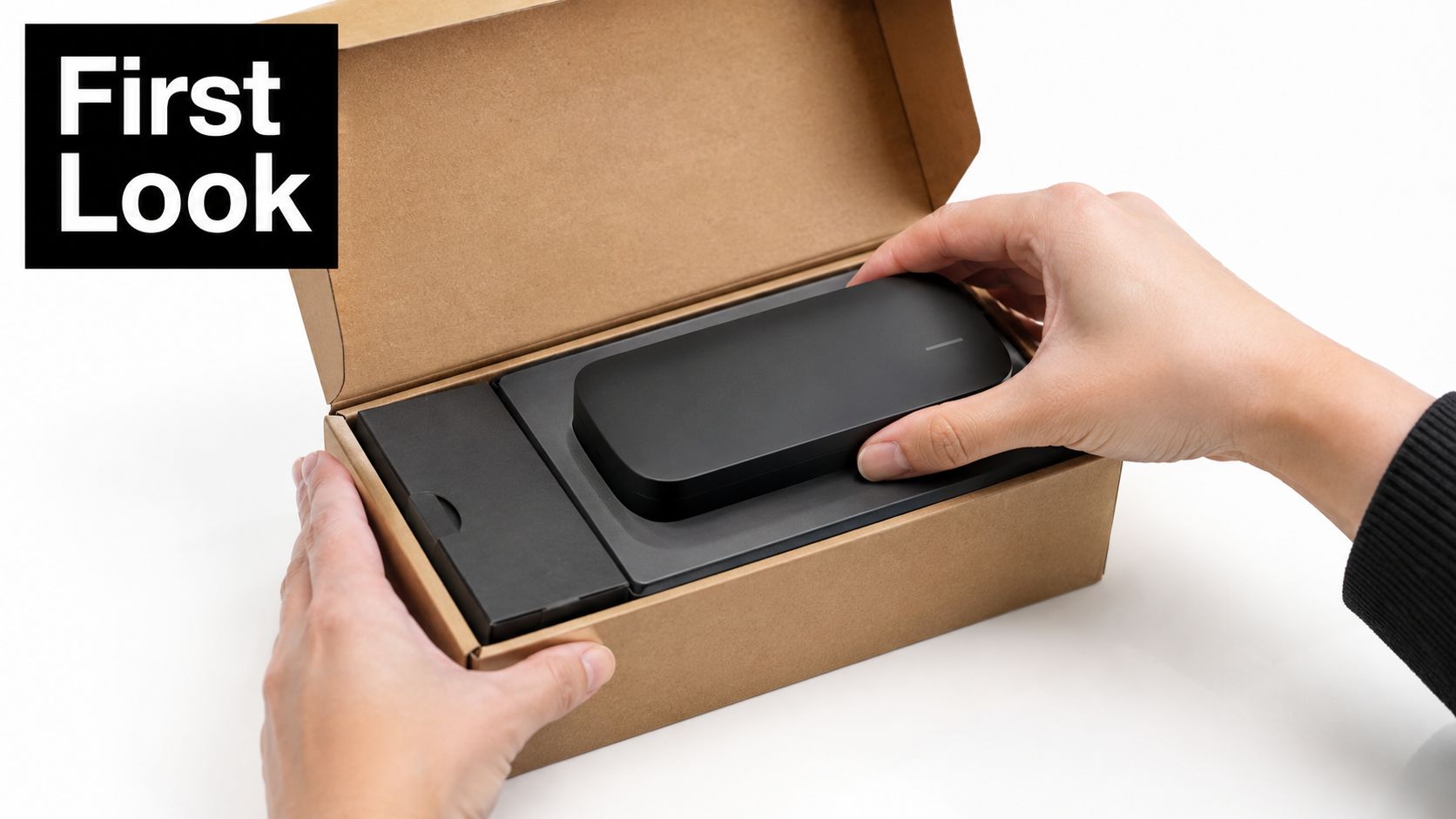
A product video earns attention when it turns a reveal into evidence. The box, finish, fit, setup, and first result should help viewers judge whether the item belongs in their lives, rather than admire its appearance.
Start with the moment that carries the most information. Immediate visual: show the opening, texture, movement, or transformation in the first shot. Context: identify who uses the product and the situation it addresses. Demonstration: show the item completing a relevant task in a real environment. Objection handling: answer a practical concern about size, setup, durability, compatibility, or care. Next step: direct interested viewers to learn more or buy.
The footage should reflect the product's buying decision. An electronics seller might move from packaging to ports, setup, and the first completed task. A clothing brand can show the garment in motion, under natural light, and styled for a specific occasion. A maker can reveal the material, finishing detail, and point at which the item is ready to ship. For digital products, a screen recording works best when the narration explains the user's result, not every feature in the interface.
Choose the presenter according to the trust problem. A polished brand demonstration gives the team control over feature accuracy and visual consistency. A creator or customer reaction can feel more credible because it brings an independent perspective. Use both when possible, and show limitations that could affect the purchase decision.
TikTok's commerce activity makes product content a conversion format as well as a branding format. Use the TikTok Shop statistics and market overview for context, then measure discovery and conversion separately.
Ready-to-shoot prompt: “Unbox one product, show the detail customers ask about most, demonstrate it in a real setting, and direct viewers to the product page.”
8. Trend-Jacking and Meme Integration
Trend-jacking can earn attention quickly, but only a relevant brand connection turns a meme into useful marketing. Start with the customer problem, product behavior, or familiar experience behind the trend. The format should help the account earn recognition or create demand, not display a logo inside a popular template.
A recruitment agency could adapt a workplace meme to contrast a vague job description with a useful one. A local café might use a reaction format to dramatize a customer's first taste of a seasonal item. A software brand could turn a familiar “before and after” joke into a brief reporting-workflow demonstration. Each example keeps the cultural format while adding an observation specific to the business.
Use a short decision gate before production. Is the trend safe for the brand? Reject formats that conflict with company values or audience expectations. Does the joke make sense without the product? If the connection disappears when the product is removed, the integration may be forced. Can the team produce it quickly? A long approval process can outlast the moment. Does the format reveal anything useful? The entertainment should support recognition, trust, or demand. Would the audience expect this voice from the account? Sudden imitation can make a brand appear inconsistent.
The trade-off is speed versus production value. Trend content has a short shelf life, so it rarely deserves the same effort as an evergreen tutorial. A clear phone video published at the right moment may perform better than a polished version approved too late. If the trend does not fit, skip it. Joining every meme can make the account memorable for inconsistency instead of relevance.
Ready-to-shoot prompt: “Choose one format your target customers already use, replace its generic punchline with a genuine industry situation, and publish only when the product connection feels natural rather than intrusive.”
9. Creator Collaboration and Duets and Stitches
A creator collaboration should change what the audience understands, not just place a brand beside a popular account. Creators bring a distinctive voice, a point of view, and an established relationship with a community that a brand account may struggle to build alone.
Start with the source video, then define the business contribution. A kitchenware company could stitch a creator's cooking problem and demonstrate a relevant technique. A business adviser might respond to a popular misconception with a concise correction. A local retailer could invite a nearby creator to show how a product fits into a real routine. A customer review could prompt a brand response, provided the business adds useful context rather than repeating praise.
A duet or stitch can Answer a question the original video leaves unresolved, Add evidence by demonstrating a claim or process in a new setting, or Offer a correction without dismissing the creator. It can also Extend a story by showing what happened afterward, or Invite participation through a test, comparison, or response from the community. Choose one role before filming. A collaboration with five competing objectives usually produces a vague video.
The main trade-off is creative control. If the business dictates every word, the result can look like an advertisement wearing a creator's face. If the brief is too loose, the creator may miss the commercial objective. Share the audience, key facts, legal boundaries, and desired action, then let the creator shape the delivery. This protects the creator's voice while keeping the content useful to the business.
Measure more than visible engagement. Profile visits, qualified comments, product-page activity, assisted traffic, and inquiries can show whether the collaboration moved viewers beyond passive viewing.
Ready-to-shoot prompt: “Find a creator video that raises a genuine customer question, stitch the relevant moment, answer it with a demonstration, and invite the original creator and viewers to add their experience.”
10. Call-to-Action and Conversion Optimization
A TikTok video can attract the right audience and still waste the opportunity if the next step is vague. Conversion-focused content gives viewers one action that matches their stage of interest, such as following for a series, commenting with a question, visiting a product page, booking a consultation, or joining an email list.
The CTA should follow the value of the video. An educational clip may ask viewers to follow for the next lesson. A product demonstration can direct interested viewers to the shop or landing page. A customer-story video might invite people to request details through a profile link. Asking viewers to buy immediately after a weak introduction creates friction because the video hasn't earned enough confidence.
Match the CTA to the funnel
Use soft actions when the viewer is still learning:
- Follow: Continue a useful series.
- Comment: Share a situation or request an explanation.
- Save: Keep a process, comparison, or reference.
- Share: Send a solution to someone with the same problem.
Use a direct action when the video has already shown proof:
- Visit: Review the product, service, or full guide.
- Shop: Choose a product or variation.
- Book: Start a consultation or appointment.
- Message: Ask about fit, availability, or access.
Make the destination match the promise. A video about one product should not send viewers to a confusing general homepage. Use trackable campaign parameters and distinct codes where appropriate, then compare TikTok-assisted traffic and branded search activity with direct clicks. Third-party benchmarking summarized by TikTok marketing and social commerce statistics also points to TikTok acting as both a discovery layer and a trigger for research beyond the app, so last-click sales aren't the only meaningful outcome.
Ready-to-shoot prompt: “Create one proof-led video with a single CTA. State the audience outcome, demonstrate it, answer one objection, and direct viewers to one specific next step.”
10-Point Comparison: TikTok Trends for Businesses
| Strategy | Implementation 🔄 | Resources ⚡ | Expected Outcomes 📊⭐ | Ideal Use Cases 💡 | Key Advantages ⭐ |
|---|---|---|---|---|---|
| Hook-First Content Structure | Moderate 🔄, iterative A/B testing for hooks | Low–Medium ⚡, simple shoots, quick edits, trend assets | High 📊, higher watch time & completion; improved organic reach | Short promos, product intros, attention-grabbing openers | Boosts completion rates; algorithm-aligned; broadly applicable |
| Behind-the-Scenes (BTS) & Process Videos | Low–Moderate 🔄, regular capture, minimal editing | Low ⚡, phone capture, time to film daily moments | Medium–High 📊, stronger loyalty, engagement, trust | Small businesses, makers, service providers, community building | Authenticity, lower production cost, long-term brand value |
| Trending Sound & Audio Integration | High 🔄, daily monitoring; fast adoption (24–48h) | Low ⚡, apply sounds quickly; monitor rights | High 📊, immediate discoverability and reach spikes | Trend-driven creators, entertainment, quick engagement pieces | Algorithmic boost; instant cultural recognition |
| Educational / "How-To" Series | Moderate 🔄, structured scripting and sequencing | Medium ⚡, expertise, prep, clear visuals/text overlays | High 📊⭐, evergreen views, authority, lead generation | Niche experts, coaches, DIY, finance, health tutorials | Credibility, searchability, strong retention |
| Authenticity & Relatability-Driven Content | Low–Moderate 🔄, consistent personal storytelling | Low ⚡, phone, minimal editing, time/personality | Very High 📊⭐, deep engagement and loyal audience growth | Personal brands, freelancers, service creators, lifestyle | Highest engagement; low production barrier; strong loyalty |
| Hashtag & Niche Community Strategy | Moderate 🔄, research + iterative testing | Low ⚡, analytics tools, time for research | Medium–High 📊, targeted discoverability, niche reach | Niche targeting, community growth, challenge participation | Access to micro-communities; cost-effective reach |
| Product Showcase & Unboxing Content | Moderate 🔄, staged shots, detail-focused edits | Medium–High ⚡, inventory, props, shipping, polished visuals | High 📊, direct conversions and social proof | E‑commerce, DTC, tech, beauty, luxury product launches | Visual persuasion; conversion-oriented; repeatable formats |
| Trend-Jacking & Meme Integration | High 🔄, real-time identification and fast execution | Low–Medium ⚡, creative adaptation, rapid edits | High but volatile 📊, fast viral spikes if timely | Youth brands, culturally-relevant campaigns, social-first ads | Quick relevance; high shareability when executed well |
| Creator Collaboration (Duets/Stitches) | Moderate 🔄, outreach, alignment, permission | Low–Medium ⚡, coordination time, mutual content | High 📊, extended reach via partner audiences | Growth hacking, educational responses, community building | Access to new audiences; algorithmic favor; relationship-building |
| CTA & Conversion Optimization | Moderate 🔄, testing CTA wording, placement, funnel | Medium ⚡, landing pages, tracking, analytics setup | Medium 📊⭐, measurable conversions; variable CTR | Sales campaigns, launches, subscription/lead gen | Direct ROI attribution; ties content to business outcomes |
Final Thoughts
The best TikTok trends for businesses aren't isolated tricks. They form a sequence. Hook-first structure earns the initial pause. Trending audio, memes, and visual formats help the content participate in the platform's current language. Behind-the-scenes footage, authentic stories, and creator collaborations give the brand a human presence. Educational series and niche community content build relevance and trust. Product demonstrations and clear CTAs convert that attention into a measurable business action.
That sequence matters because reach without relevance creates weak traffic. A video can attract viewers who enjoy a joke but have no interest in the offer. The same brand may then conclude that TikTok “doesn't work,” when the actual problem is that its content system stops at entertainment. Every post should have a job, and the job should determine the format, the production effort, and the metric that matters.
Trend speed creates another operational challenge. The APAC trend research referenced in TikTok's 2026 forecast found that nearly half of trends disappear within five days, while only a small minority continue beyond two weeks. That makes indiscriminate trend-chasing a poor use of team time. Businesses need a filter based on brand fit, audience relevance, production speed, and likely business value.
The more durable opportunity is proof-led content. TikTok's forecast for 2026 describes a move from impulse toward intention, while related market research reports that U.S. users spend about 57 minutes per day on the app and that 49% of U.S. users use TikTok as a search tool, as summarized by TikTok's search and discovery report. Those figures point to a platform where viewers aren't only scrolling past ideas. They're also looking for explanations, products, opinions, and evidence.
Use that behavior to build a balanced publishing system. Keep a small portion of content available for fast trend participation, but anchor the calendar in repeatable formats your team can produce reliably. A local service provider might prioritize how-to answers, process footage, customer questions, and location-specific community content. An e-commerce brand may combine unboxings, real-use demonstrations, creator reactions, and conversion-focused follow-ups. A B2B company can use hooks and humor without abandoning proof, clarity, or expertise.
Measure each job differently. Watch retention and meaningful engagement for attention formats. Review saves, comments, and repeat questions for educational content. Track profile visits, assisted traffic, branded search activity, product-page visits, inquiries, and purchases for lower-funnel content. A view count can tell you that a video traveled. It can't tell you whether the right customer trusted the business enough to take the next step.
The practical starting point is simple. Choose two trends from this list, adapt each to one specific audience problem, create several variations, and review the results against the business goal rather than popularity alone. Keep the formats that your team can repeat and that your customers respond to. Drop the ones that demand too much production, attract the wrong audience, or create attention without useful action.
Viral.new offers daily, trend-aligned TikTok content ideas for businesses, including prompts for product demonstrations, company updates, industry insights, employee spotlights, and customer-focused formats. It can help solo creators and marketing teams turn changing TikTok behavior into ready-to-shoot concepts that support consistent publishing.
Use Viral.new to receive fresh TikTok ideas for your business and niche each morning. Turn the trends that fit your audience into practical hooks, demonstrations, and conversion-focused videos your team can publish while the opportunity is still relevant.
