
Promoting products on TikTok is a different ball game. It’s a blend of authentic, almost-accidental-looking organic content, a smooth TikTok Shop setup, super-targeted ads, and real-deal creator partnerships. The secret sauce? Create content that entertains first and sells second. You have to jump on trends, capture attention, and build a community that actually trusts you.
Your Playbook for TikTok Product Promotion
Alright, let's get into your guide for turning those endless scrolls into loyal customers. This section is all about the most effective strategies for showing off your products on the platform and what's actually working right now. Forget what you know about old-school advertising; on TikTok, creativity and authenticity will always beat a huge budget.
This platform has exploded into an e-commerce goldmine, and the numbers are staggering. TikTok's ad revenue shot up to $33.1 billion worldwide, a ridiculous 40.5% jump in just a year. It’s now grabbed 12% of the entire US social ad market, mainly because it's so much cheaper. With an average CPM of just $7.03, it's an incredible 44% less expensive than Meta. For anyone selling products, this isn't just an opportunity—it's essential. If you want to dive deeper, you can find more insights about TikTok marketing trends that paint the full picture.
The Four Pillars of TikTok Success
To really nail your strategy, you need to get a handle on the four main ways to play the game. Each has its own job, and the brands that are crushing it use a mix of all four to get the most eyeballs and sales. Think of these as the core tools in your marketing shed.
- Organic Content: This is your foundation. It’s all about making videos that feel native to the platform—so much so that they don't even feel like ads.
- TikTok Shop: This feature basically turns your profile into a mini-storefront. It lets people buy your stuff right there in the app, which is huge for catching those impulse buys.
- Paid Advertising: Got an organic video that's popping off? Paid ads let you pour some gasoline on the fire, pushing it out to a much bigger, more specific audience.
- Creator Partnerships: Working with influencers is a shortcut to trust. You're borrowing their connection with a niche audience to get instant social proof.
TikTok isn't just another social app; it's a cultural engine and a powerful sales channel all in one. Your goal is to become part of the conversation, not just another ad that interrupts it.
To help you figure out where to focus your energy first, here’s a quick look at how each method stacks up.
Core TikTok Promotion Methods at a Glance
This table breaks down the main strategies you can use, giving you a clear picture of what each one is good for and the biggest benefit it offers.
| Method | Best For | Key Benefit |
|---|---|---|
| Organic Content | Building brand personality and trust without a big budget. | High potential for viral reach and authentic audience connection. |
| TikTok Shop | Brands with physical products seeking direct, frictionless sales. | Seamless in-app checkout experience that captures impulse buys. |
| Paid Ads | Scaling sales, targeting specific demographics, and retargeting. | Predictable traffic and measurable return on ad spend (ROAS). |
| Creator Partnerships | Gaining credibility and reaching highly engaged niche communities. | Authentic endorsements from trusted voices that drive conversions. |
Choosing the right mix depends entirely on your goals and resources, but understanding how each pillar works is the first step toward building a strategy that truly delivers.
Creating Organic Content That Actually Sells
Organic reach is the beating heart of TikTok. Unlike other platforms where you’re constantly feeding the ad machine, here, a genuinely creative video can still rack up millions of views without you spending a dime. But turning those views into sales? That’s an entirely different art form.
The secret is to stop thinking like a marketer and start thinking like a creator. Your job is to make content that highlights your products without ever feeling like an ad. It should entertain, educate, or inspire first, and sell second. When you get this right, your videos slide right into someone’s “For You” Page, feeling like a natural discovery instead of a jarring commercial. That's how you build a real community that actually wants to buy from you.
Nailing the First Three Seconds
Think about how you use TikTok. You scroll, and scroll, and scroll. You have a tiny, almost non-existent window to stop that thumb. If your video doesn’t immediately give someone a reason to pause, they're gone. That initial moment—the hook—is everything.
A powerful hook is specific, sparks curiosity, and makes a promise. Forget "Check out our new product!" and try something that hits a real pain point or desire.
- Problem-focused: “Stop letting your fresh herbs go to waste in the fridge.” (For a food storage product)
- Curiosity-driven: “This is the one skincare mistake that’s secretly aging you.” (For an anti-aging serum)
- Benefit-led: “How I get a salon-quality blowout at home in under 10 minutes.” (For a hair tool)
Your visuals have to match that energy. Start with immediate action. Don't waste those precious first seconds on a slow logo reveal. Jump straight into the product in use, a dramatic "before and after," or a visual so strange it makes people stop and think, "Wait, what's happening here?"
Proven Video Formats for Product Promotion
Okay, you’ve hooked them. Now what? While jumping on trends is a must (more on that later), you need a few reliable formats in your back pocket to create consistently great content. These formats work because they deliver value while weaving your product into the story.
Here are a few I’ve seen work time and time again:
- Problem/Solution: This is a classic for a reason. Start by showing a super relatable problem. Think of the struggle of scrubbing stained grout, then cut to a satisfying shot of your cleaning product making it look brand new. It’s simple, visual, and incredibly effective.
- 'Day in the Life' Integration: People love seeing how products fit into a real person's routine. If you sell a high-energy coffee alternative, show your "day in the life as a busy founder" and feature yourself grabbing that drink to power through the 3 PM slump. It feels real because it is.
- Unboxing and First Impressions: The thrill of opening a new package is universal. Film a genuine unboxing, talking through the packaging, the product’s feel, and your honest first take. It builds hype and acts as powerful social proof.
The best promotional content on TikTok doesn't interrupt the user experience—it is the experience. Your video should feel like a helpful tip from a friend or an entertaining story, where your product just happens to play a starring role.
Riding Trends and Championing Your Customers
Jumping on a trending sound or meme is one of the fastest ways to get seen. The TikTok algorithm is literally designed to push content that uses popular audio. The key is to adapt the trend to your product in a way that feels clever, not like a dad trying to be cool. If a popular format is about revealing a secret, use it to reveal a "secret" game-changing feature of your product.
But you know what's even more powerful than your own content? Content made by your customers.
User-Generated Content (UGC) is the holy grail of social proof. It's raw, it's trustworthy, and it screams to potential buyers that real people are obsessed with your product. You can encourage this by running a contest, offering a discount for anyone who posts a video, or simply by finding, reposting, and celebrating the best content from your fans (always with credit, of course).
Finally, don't forget your caption and Call-to-Action (CTA). This is where you close the deal. Don't just list features. Ask a question to get the comments flowing, like, "What's the first thing you'd use this for?" Then, give them a clear next step. Ditch the boring "link in bio" and try something with more urgency, like, "Grab yours before they sell out again! Shop the link in my bio."
For a deeper dive into shooting and editing, our complete guide on how to create product videos that convert has even more practical strategies.
Scaling Sales with TikTok Shop and Paid Ads
Once your organic content starts finding its groove and pulling in views, it's time to pour some fuel on the fire. This is where we shift gears from simply building brand awareness to actively driving sales, turning those engaged viewers into actual customers. The key is making the path from discovery to checkout as seamless as possible using TikTok's own powerful tools.
Your first move should be setting up TikTok Shop. Think of it as the platform’s built-in e-commerce engine. It literally transforms your profile into a storefront, letting people buy your products right inside the app. This is huge because it eliminates the friction of sending users to an external website, which is often where you lose people, especially on mobile.
Unlocking Direct Sales with TikTok Shop
Getting your TikTok Shop live is a genuine game-changer. Suddenly, you can tag specific products in your videos and LIVE streams. A little shopping bag icon pops up, and with a single tap, viewers can see product details and buy without ever leaving their For You Page. It’s perfect for capturing those impulse purchases.
But just having a shop isn't enough; you need to make it compelling.
- Show it off: Use crisp, clear photos from every angle, but more importantly, include short video clips of your product being used. Let people see it in action.
- Write for humans: Ditch the corporate jargon. Keep your product descriptions short, punchy, and focused on the benefits. Bullet points are your friend here.
- Lean into reviews: Social proof is everything on TikTok. Actively encourage customers to leave reviews—they build trust and can seriously boost your conversion rate.
A killer feature baked into TikTok Shop is the Affiliate Program. This lets other creators promote your stuff and earn a commission on any sales they drive. You’re essentially turning your biggest fans and customers into a dedicated, highly motivated sales force, scaling your reach far beyond what you could do on your own.
This simple flowchart breaks down how a solid organic video converts viewers.
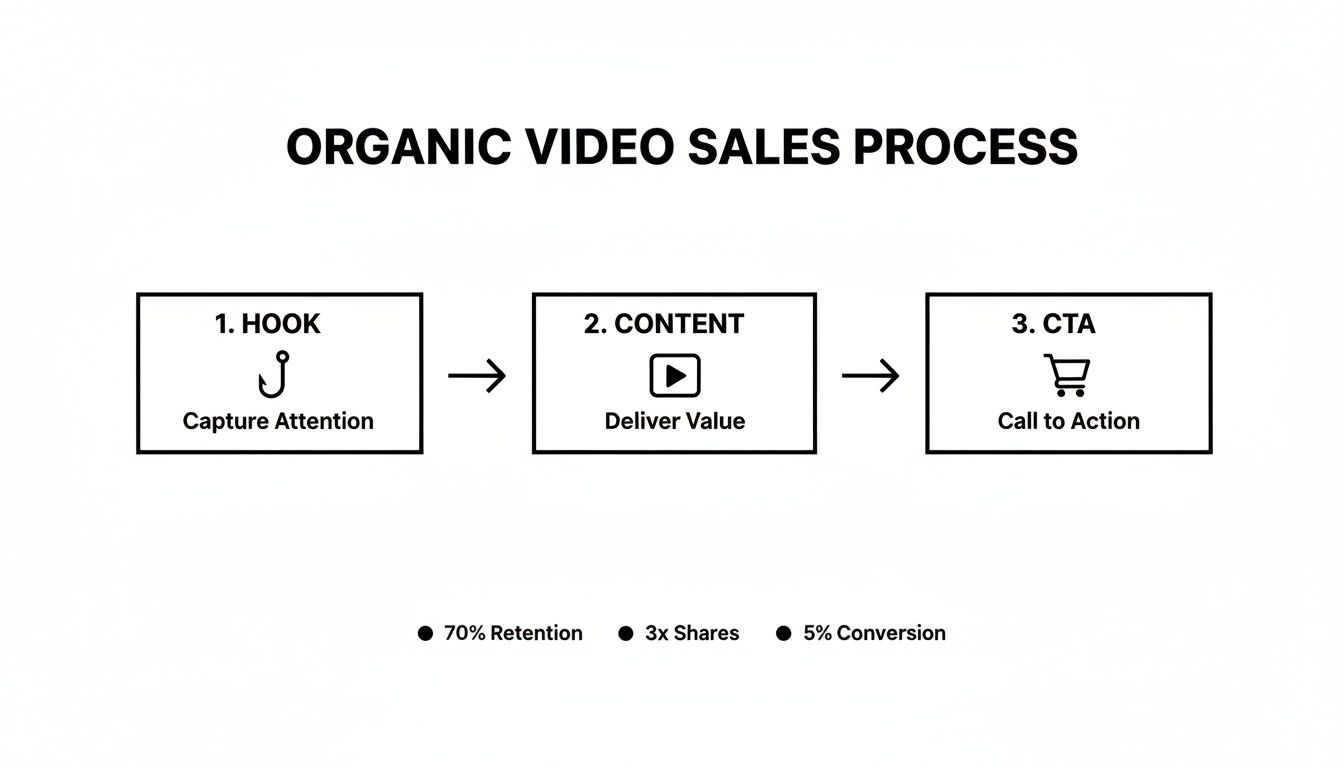
It all comes down to a strong hook grabbing their attention, engaging content holding it, and a clear call-to-action telling them exactly what to do next.
Demystifying TikTok Ads Manager
While TikTok Shop helps you cash in on your organic efforts, paid ads are how you achieve predictable, scalable growth. TikTok Ads Manager is your command center for this. Here, you build and launch campaigns to hit specific goals, whether that’s driving traffic, generating leads, or locking in sales.
The most successful TikTok ads don't look like ads at all. They blend seamlessly into the user's feed, borrowing the style, sounds, and energy of top-performing organic videos. Your goal is to entertain, not interrupt.
The trick is to create ads that feel native to the platform, not like a clunky TV commercial that snuck in.
Start by getting laser-focused on your audience. TikTok’s targeting options are incredibly granular, letting you reach users based on interests, behaviors, demographics, and even how they’ve interacted with certain videos or creators. This stops you from wasting money on people who will never buy your product. If you're new to the ad game, our guide on TikTok marketing for small business is a great place to start.
Choosing the Right Ad Format
Your campaign's success often comes down to picking the right tool for the job. TikTok offers a few different ad formats, and knowing when to use each one is crucial for getting the most out of your budget.
Here’s a quick breakdown of the most common ad types for selling products.
Comparing TikTok Ad Formats
| Ad Format | Primary Objective | Best Use Case |
|---|---|---|
| In-Feed Ads | Conversions & Traffic | Promoting specific products with a direct call-to-action to your TikTok Shop or website. |
| Spark Ads | Engagement & Social Proof | Boosting your best organic videos or a creator's UGC to a much wider audience. |
| TopView Ads | Brand Awareness | Launching a new product or a major campaign with a high-impact, unskippable video. |
In-Feed Ads are your workhorse; they show up natively in the For You Page and are perfect for driving sales. Spark Ads are my personal favorite—they let you put ad spend behind your existing organic posts (or a creator’s, with permission), which means you’re amplifying content that already has social proof like comments and likes. TopView Ads are the big guns, a premium spot that takes over the screen when a user first opens the app, guaranteeing maximum eyeballs.
My advice? Always be testing. Create a few different versions of your ad creative—try different hooks, visuals, sounds, and calls-to-action. Run them with a small budget to see what resonates, then go all-in on the winner. This simple habit of testing and iterating will dramatically improve your results and lower your customer acquisition costs over time.
Building Profitable Creator Partnerships
Collaborating with creators is one of the quickest ways to build credibility and drive real sales on TikTok. Why? Because you’re not just buying views; you’re borrowing trust. A recommendation from a creator their audience genuinely loves feels less like a corporate ad and more like a tip from a good friend.
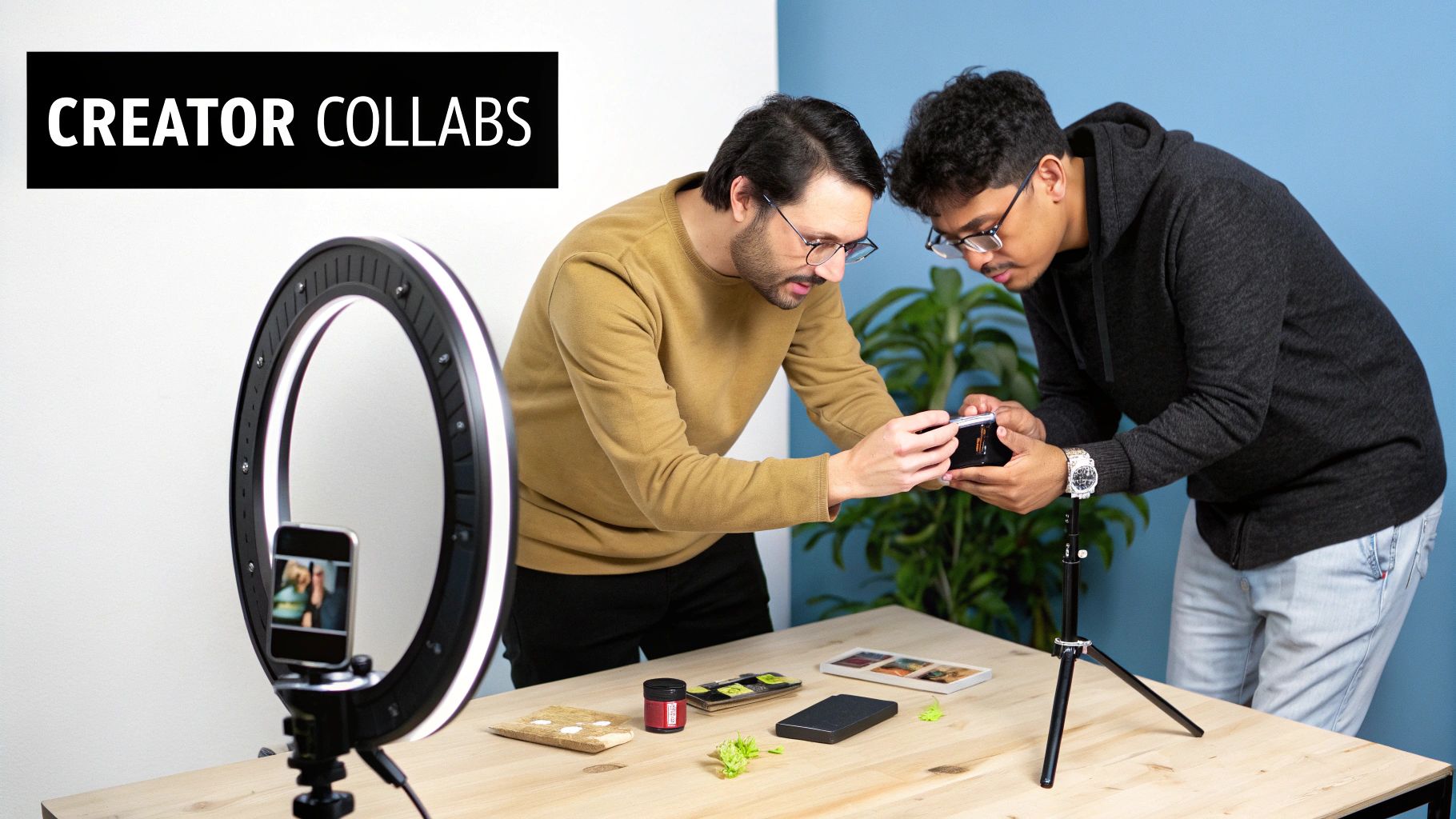
This approach immediately cuts through the usual marketing noise. When a trusted voice shows off your product in their own, natural way, it provides powerful social proof that a branded ad could never replicate. The real trick is finding the right people whose audience and values are a perfect match for your brand.
Finding and Vetting the Right Creators
It's tempting to chase creators with the biggest follower counts, but that's often a rookie mistake. While mega-influencers offer massive reach, they also come with a hefty price tag and, sometimes, surprisingly low engagement.
The real gold is often found with micro-influencers—those with roughly 10k-100k followers. These creators typically have a hyper-engaged, niche community that hangs on their every word. A partnership with a micro-influencer in the sustainable fashion space, for instance, will almost certainly drive more qualified traffic for an eco-friendly clothing brand than a generic shoutout from a mainstream celebrity.
A great place to start your search is the official TikTok Creator Marketplace. This platform lets you filter potential partners by their niche, audience demographics, and performance metrics, making it easy to build a shortlist.
When you're vetting creators, you have to look beyond the vanity metrics. Dive deep into their comment sections. Are followers having real conversations and asking questions? Or is it just a wall of generic "great vid!" comments?
Here are a few red flags I always look for:
- Weird Engagement Ratios: A video with a million views but only a few hundred comments can be a sign of inflated or bought metrics.
- Off-Brand Content: If their feed is all over the place with random trends that have nothing to do with your brand's values, the partnership will feel forced and inauthentic.
- Poor Communication: A creator who's unresponsive or unprofessional from the get-go is probably going to be a nightmare to work with down the line.
The best partnerships feel like a seamless extension of the creator's existing content. If you can’t easily picture your product in their feed, they’re probably not the right fit, no matter how many followers they have.
Crafting Outreach That Actually Gets a Reply
Creators are constantly bombarded with partnership requests. A generic, copy-and-paste message is a one-way ticket to their trash folder. Your outreach needs to be personalized, showing you’ve actually done your homework.
A solid outreach message always does three things:
- Gets Personal: Mention a specific video of theirs you liked and briefly explain why you think they'd be a great fit.
- Is Crystal Clear: State your offer upfront. Are you gifting a product for an honest review, or do you have a budget for a paid collaboration? Don't be vague.
- Keeps It Simple: Get to the point. Outline the campaign goal and what the next steps are, but don't overwhelm them with a wall of text.
Once they're on board, a comprehensive creator brief is absolutely non-negotiable. This document is your campaign's bible, ensuring everyone is on the same page. It should cover the campaign goals, key talking points, a clear call-to-action, and any crucial "dos and don'ts."
But remember, this is a guide, not a script. Give them the creative freedom to showcase your product in their own authentic style—that's what you're paying for! For those creators looking to maximize their earnings, we explore several methods in our guide on how to make money on TikTok.
Structuring Different Collaboration Models
Not all partnerships look the same. The right approach really depends on your budget, your goals, and how deep you want the relationship to go.
- One-Off Paid Posts: Perfect for specific campaigns, like a new product launch or a holiday promotion.
- Product Gifting: A low-cost way to get your product in front of creators. While a post isn't guaranteed, it can lead to some fantastic organic mentions if they love it.
- Affiliate Partnerships: Creators earn a commission on sales they drive through a unique link or code. This is a great performance-based model that minimizes your upfront risk.
- Long-Term Ambassadorships: This is about building a real, lasting relationship with a creator over several months or even a year. It fosters deep brand loyalty and results in a steady flow of authentic content.
Using Analytics to Optimize Your Strategy
Making content is really only half the job. If you’re serious about selling products on TikTok, you have to let the data be your guide. Flying blind and just posting what you feel will work is a fast track to burnout and a lot of wasted effort. This is exactly where TikTok Analytics becomes your best friend.
You can't fix what you don't measure. Diving into your analytics dashboard is what takes you from guessing to making smart, informed decisions that actually drive sales. It's the difference between a one-off viral video and building a predictable system for growth.
Key Metrics That Actually Matter for E-commerce
When you first open up your analytics, it's easy to get overwhelmed by all the numbers. Don't fall into the trap of obsessing over vanity metrics like your follower count. For e-commerce brands, a few key data points tell you what's really happening.
Here’s what you should be zeroing in on:
- Average Watch Time: This tells you exactly how long people are sticking around. A longer watch time is a huge signal to the algorithm that your content is engaging, which helps it get pushed out to more people.
- Video Completion Rate: This is the percentage of viewers who watched your video all the way through. A high completion rate is gold—it means your content was compelling enough to hold someone's attention from start to finish.
- Profile Views: How many people saw a video and were curious enough to tap through to your profile? This is a crucial step in the customer's journey and a strong indicator of interest.
- Link-in-Bio Clicks: If you don't have TikTok Shop set up, this is your money metric. It tracks how many people are leaving the app to go to your store, showing direct purchase intent.
By keeping an eye on these, you can start to see which videos are not just getting views, but are actually moving potential customers down the path to making a purchase.
Finding Your Winners (and Learning from Your Flops)
Think of your analytics dashboard as a treasure map. It points you directly to the content that’s hitting the mark and the stuff that’s falling flat, giving you the clues you need to double down on what works.
Start by sorting your videos by views, likes, and comments over the last 28 days. Look for the common threads in your top performers. Do they all use a similar hook? Do they feature a specific product? Maybe you posted them all around the same time of day.
Now, do the opposite. Look at your worst-performing videos. Where did people drop off? Was the hook weak? Did you use an audio that was already off-trend? Figuring out why a video flopped is just as valuable as knowing why one took off. This is how you build an iterative strategy that gets smarter over time.
Your comment section is a goldmine for free market research. Pay close attention to the questions people ask and the feedback they give. These comments can reveal product pain points, highlight desired features, and even spark your next viral video idea.
A Simple Framework for Testing and Iterating
Once you’ve got a handle on your baseline performance, it’s time to start experimenting with a clear purpose. The goal is to isolate different variables so you can figure out what really moves the needle.
Create a simple testing schedule for yourself. For one week, you might test three different hooks for a video about the same product. The next week, you could take your best-performing hook and try it with three different trending sounds.
Here are a few things you can start testing right away:
- Hooks: Pit a problem-focused opener against a benefit-led one.
- Formats: See how a straightforward product demo performs against a "day in the life" style video.
- Sounds: Use the exact same video clip but swap out different trending audios. You might be surprised which one the algorithm prefers.
- Posting Times: Post in the morning, afternoon, and evening to see when your specific audience is most likely to be scrolling.
This cycle of analyzing, creating a hypothesis, and testing is how you go from just making content to building a real strategy. It turns content creation from a guessing game into a science, making sure your efforts to sell on TikTok get more effective with every post.
This data-driven approach is especially powerful on a platform with such high user interaction. TikTok's engagement rate averaged 4.86% in early 2025, a figure that leaves other platforms in the dust. For marketers, this translates into real results, with campaigns often seeing a +96% higher return on ad spend than on other digital channels. You can dive deeper into these numbers by checking out TikTok’s powerful engagement statistics on Buffer.com.
Common Questions About Promoting Products on TikTok
Diving into TikTok commerce can feel like a whole new world, and it’s totally normal to have questions, even if you have a plan. We get asked a lot of the same things by brands just starting out. Here are some clear, no-fluff answers to the most common questions we hear.
How Often Should I Post to Promote My Products?
There's no magic number here, but if there's one word to remember, it's consistency.
If you're new to the platform, a solid goal to shoot for is 1-3 quality videos every day. This rhythm gives you enough presence to stay on people's For You Pages and feeds the algorithm enough content to figure out who your audience really is.
But let's be clear: don't burn yourself out just to hit a quota. A single, well-thought-out video will always do better than three rushed ones. Find a pace that you can actually stick with.
The TikTok algorithm loves a steady hand. It's much better to post one great video daily than to dump a week's worth of content on a Monday and then disappear.
Do I Really Need a Big Budget to Succeed?
Nope. Not at all. This is one of the biggest myths—and one of the greatest things—about TikTok. For smaller brands, it’s a massive advantage.
The algorithm doesn't care how much money you have. It cares about how good your content is. We've seen countless small businesses go viral and build a huge following with a $0 budget, all because they made authentic videos that hit the right nerve in their niche.
- Go organic first. Before you spend a dime, focus on your content strategy. Figure out what your audience actually wants to see from you.
- Pour gas on what's working. Once you have a video that's getting good organic traction, then you can put a small budget behind it with something like Spark Ads to push it out to an even bigger, more targeted audience.
What Are the Biggest Mistakes Brands Make on TikTok?
The most common mistake, by far, is treating TikTok like a carbon copy of Instagram or Facebook. That slick, polished ad or Reel you made for another platform? It will almost certainly fall flat here. TikTok has its own culture, and it’s all about being real, funny, and relatable.
Another classic error is going for the hard sell in every video. A good rule of thumb is the 80/20 rule: 80% of your content should be about entertaining, educating, or connecting with your community. Only 20% should be a direct promotion. People are on TikTok to escape, not to watch commercials.
Finally, ignoring trends is a huge missed opportunity. Hopping on a trending sound or format is the fastest way for a new account to get discovered. The key is to make content for TikTok, not just on TikTok. Let your brand's personality show.
Ready to stop guessing and start creating? Viral.new sends fresh, niche-specific TikTok ideas straight to your inbox every morning. You can spend less time scrolling for trends and more time making content that connects. Discover your next viral video prompt today.
