
A TikTok hashtag tracker is what separates the pros from the amateurs. It’s a tool that gives you hard data on how your hashtags are actually performing, turning your content strategy from a guessing game into a repeatable, strategic system. Instead of just tossing random tags on your videos and hoping for the best, a tracker shows you what’s driving views, what’s getting engagement, and what’s actually growing your audience.
Why Guessing Hashtags No Longer Works

Let's be honest—that old trick of throwing a bunch of popular hashtags at your TikToks and hoping one of them sticks? That’s a strategy built entirely on luck. In a space as crowded as TikTok, luck runs out really fast. The "spray and pray" method just doesn't cut it anymore when you’re up against creators who are using data to their advantage.
The gap between hoping for engagement and knowing which hashtags deliver is huge. A good TikTok hashtag tracker completely changes the game. It takes your strategy from a shot in the dark to a reliable, analytical process where you can see exactly what’s working and why.
Beyond Views Understanding True Impact
Real growth isn't just about big view counts; it's about understanding the story behind the numbers. A tracker helps you dig into the core metrics that tell you what’s truly resonating with people.
We're talking about things like:
- View Velocity: This is how quickly your video picks up steam right after you post it. A fast start is a massive signal to the TikTok algorithm.
- Engagement Rate: The percentage of viewers who actually liked, commented, shared, or saved your video. This is where you see genuine interest.
- Follower Conversion: How many people who found you through a specific hashtag actually bothered to hit that "follow" button.
Keeping an eye on these metrics gives you a serious competitive edge. Let's say you're a small e-commerce brand selling handmade candles. You might start out using broad tags like #candles and #smallbusiness.
A tracker could show you that while
#smallbusinessbrings in decent views, a much more niche hashtag like#cozyhomedecorhas a 5x higher engagement rate and is driving way more profile visits. That kind of insight is pure gold.
This is what tracking looks like in the real world. It’s not just about chasing the biggest hashtags—it's about finding the right ones that connect you with an audience that's ready to engage.
And the scale of this ecosystem is staggering. By early 2025, #fyp had racked up almost 79.54 trillion views, with #foryou not far behind at around 43.7 trillion. You're probably not going to compete directly with those, but a tracker helps you find your own slice of that massive potential. You can see more stats on the top-performing TikTok hashtags on Statista.
Armed with this data, our candle brand could completely pivot its content. They might start creating more videos around home aesthetics and cozy vibes because they know that’s what their most engaged viewers love. This is how small brands can triple their audience in a few months—not by getting lucky, but by listening to what the data is telling them.
Setting Up Your Hashtag Tracking System
It's easy to get buried in the endless sea of TikTok hashtags. Trust me, I've been there. The secret isn't tracking everything—that's a surefire way to burn out. Instead, you need to build a smart, manageable system that actually fits into your daily routine.
First things first, you need to pick your tools. You could go for an all-in-one social media suite like Sprout Social, which handily combines hashtag analytics with your scheduling and reporting. Or, you might prefer a dedicated tool like Keyhole that goes deep into real-time tracking and helps you spot key influencers. Honestly, if you're just starting out or on a tight budget, a well-organized spreadsheet can be surprisingly effective.
The right tool really boils down to your specific needs. An agency juggling a dozen clients will probably get more value from a comprehensive platform. A solo creator? You might just need a focused tracker to keep an eye on a few important campaigns.
What to Actually Measure: Your Core Hashtag KPIs
Once you’ve got your tool, it's time to figure out what you're actually looking for. It's easy to get distracted by flashy numbers that don't mean much. The key is to focus on the Key Performance Indicators (KPIs) that genuinely tie back to your growth goals.
Here are the metrics I always keep a close eye on:
- Post Volume: Simply put, how many videos are using a certain hashtag? This gives you a quick read on its popularity and how much competition you're up against.
- Average Engagement Rate: This is a big one. What percentage of people are actually liking, commenting, and sharing videos with this tag? High engagement means you've found an active, passionate audience.
- View Velocity: How fast are new videos with the hashtag racking up views? This is your crystal ball for spotting trends just as they're taking off, not after they've already peaked.
- Top Contributors: Who are the creators leading the charge with this hashtag? Knowing this is gold for competitor research and finding potential collaborators.
This dashboard from Talkwalker is a perfect example of how professional tools lay this all out for you, tracking things like mentions, engagement, and reach.
What’s so powerful about this view is seeing the data over time. You can instantly spot a sudden spike in conversation or see when a once-popular hashtag is starting to lose steam.
Building Your Hashtag Master List
The backbone of any good tracking system is a carefully chosen "master list" of hashtags. This shouldn't be a random brain dump. It needs to be a strategic mix that covers all your angles. I find the best way to organize this is by breaking it down into three simple categories, either in a spreadsheet or right inside your tracking tool.
- High-Volume (Broad Reach): Think of these as the behemoths—the tags with billions of views like #digitalmarketing or #booktok. You’ll want to use them strategically, but sparingly, to tap into those massive audiences.
- Niche-Specific (Community Focused): These are the hashtags that speak directly to your people. For example, #coldemailtips or #historicalfictionreads. This is where you'll find your most engaged followers.
- Branded & Campaign (Ownership): These are the tags you create, like our own #ViralNewIdeas. Tracking these is how you measure brand recall and see how much user-generated content you’re inspiring.
Your end goal here is a simple weekly dashboard. Each week, just log the performance of 5-10 key hashtags from your master list. A quick daily peek at trending sounds, paired with a deeper weekly dive into your core tags, is a fantastic rhythm to get into. That consistency is what turns raw data into a reliable engine for growth.
Turning Hashtag Data Into Actionable Insights
Collecting data with a TikTok hashtag tracker is just the first step. The real magic happens when you translate those raw numbers into a smarter, more responsive content strategy. It's easy to get lost in the metrics, but each one tells a story about what your audience is paying attention to and where your next big opportunity might be hiding.
Honestly, this is what separates creators who get a lucky viral hit from those who build sustainable, long-term growth. It’s all about shifting your mindset from just looking at numbers to asking, “Okay, what is this metric telling me to do next?”
The process isn't as complicated as it sounds once you get the hang of it. It really boils down to a simple, repeatable system.
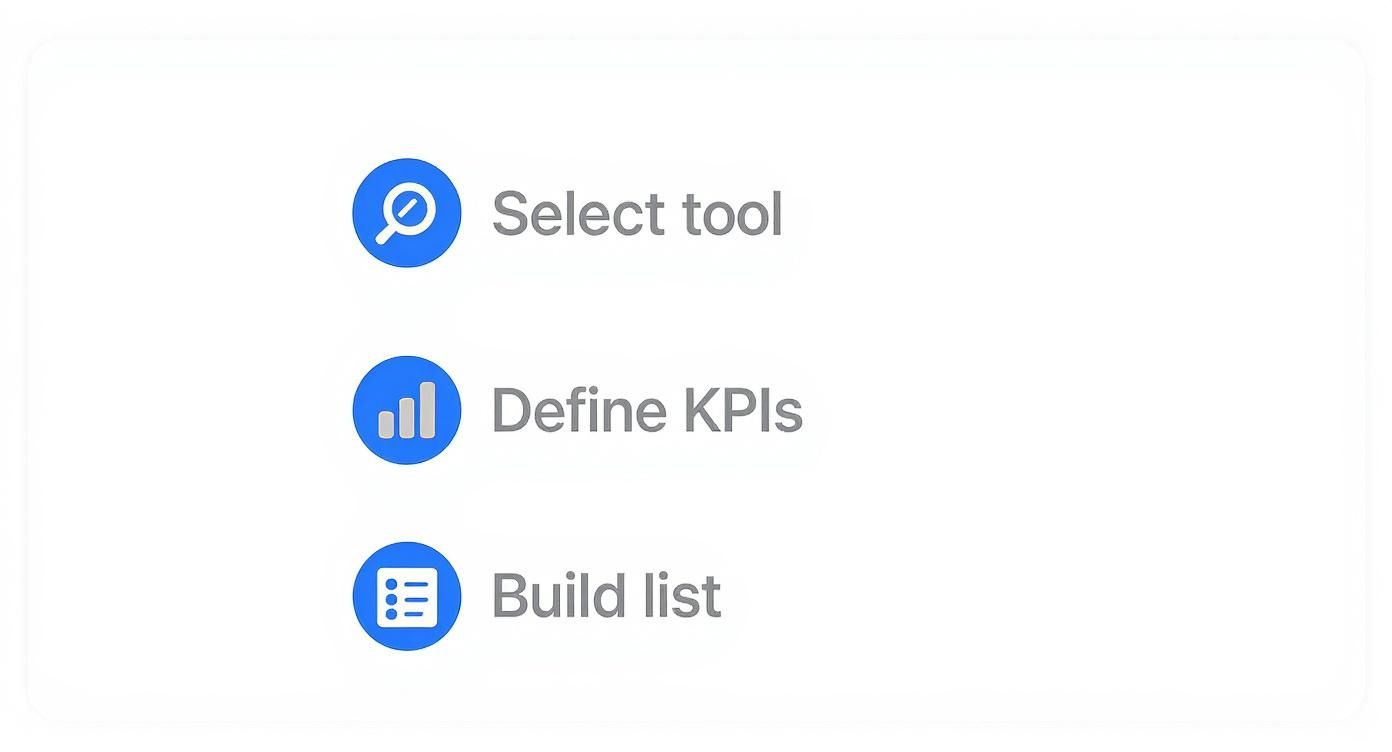
This shows just how crucial it is to set a solid foundation—picking the right tool and knowing what you want to measure—before you can even start pulling meaningful insights from the data you collect.
Decoding Key Hashtag Metrics
So, let's get into the weeds. What do all those numbers in your hashtag tracker actually mean for your content? Think of each data point as a signal guiding your creative decisions.
This is where a dedicated tool really shines. Instead of guessing, you get concrete data on reach, engagement rates, audience sentiment, and even who the key influencers are in a particular conversation. Powerful platforms like Talkwalker offer deep hashtag analytics that track mentions, likes, shares, and growth over time, giving you a huge advantage.
Here's a breakdown of the most important metrics and what they're really telling you.
Key Hashtag Metrics and Their Strategic Implications
| Metric | What It Measures | Strategic Implication (What It Tells You) | Actionable Next Step |
|---|---|---|---|
| Mention Volume | The total number of times a hashtag is used in a given period. | This is an indicator of a trend's size and popularity. Is the conversation massive or niche? | Pair high-volume tags with niche ones to stand out. For low-volume tags, assess if it's a growing opportunity or a dead end. |
| Potential Reach | The estimated number of unique users who have seen posts containing the hashtag. | This shows the hashtag's overall visibility and broadcast potential. | If reach is high but engagement is low, your content isn't resonating. Refine your creative to better match audience expectations. |
| Engagement Rate | The percentage of users who interact (like, comment, share, save) with content using the hashtag. | This is the true measure of a community's passion. A niche tag with high engagement is gold. | Double down on content for high-engagement hashtags. This is where your most dedicated audience lives. |
| Sentiment Score | The emotional tone (positive, negative, neutral) of the conversations around a hashtag. | This is your direct line to audience perception. Are they happy, frustrated, or indifferent? | Investigate any sudden negative spikes immediately. Amplify positive sentiment by featuring user content and celebrating your community. |
By consistently looking at these metrics together, you move from just posting content to strategically participating in conversations where you can actually make an impact.
Responding to Audience Sentiment
Of all the metrics, sentiment analysis is your brand's early warning system. It cuts through the noise and tells you how people feel about the conversations happening around your hashtags.
Let's say you see a sudden, sharp spike in negative sentiment around your branded hashtag, like
#MyBrandFail. That's a five-alarm fire. It’s a critical alert that could point to a product defect, a customer service disaster, or a PR crisis brewing. You can't afford to ignore it.
On the flip side, overwhelmingly positive sentiment around a campaign hashtag is the ultimate green light. It means you’ve struck a chord and found something that truly resonates. This is your cue to double down—amplify the user-generated content, feature your biggest fans, and ride that wave of positive momentum.
Think of sentiment as direct, unfiltered feedback. It tells you exactly what your audience loves and what needs to be fixed, allowing you to steer the conversation and turn potential problems into genuine opportunities for connection.
From Analytics to Authentic Content Ideas

This is where the magic happens. All that data you’ve been tracking? It’s not just numbers on a screen—it's the raw material for your next hit video. Now, we're going to bridge the gap between your dashboard and actually dominating the For You Page.
This isn’t about just copying what’s already popular. It's about taking those signals and spinning them into something that feels uniquely you and speaks directly to your audience. I've seen two killer techniques work time and time again to turn analytics into an endless supply of fresh ideas.
Master the Trend Jacking Technique
Let's talk about trend jacking. It’s the art of catching a massive, fast-moving trend and making it relevant to your world. Your tracker will be screaming at you when a hashtag starts to explode. The rookie move is to just copy the trend. The pro move is to put your own spin on it.
Say you’re a fitness brand and you see #cozycardio picking up steam. A generic post would be a simple, low-impact workout. Yawn. A data-savvy creator thinks bigger and creates a whole series of videos that serve their specific audience:
- "5 Cozy Cardio Moves You Can Do in a Tiny Apartment"
- "My Favorite Shows to Binge-Watch During Cozy Cardio"
- "Cozy Cardio Fits That Aren't Just Your Old Stained Sweatpants"
See the difference? Each one of these ideas taps into the huge reach of the trending tag but is tailored for their community's real-life problems and interests. That's how you connect.
Trend jacking isn't about just showing up to the party. It's about becoming the go-to person who can explain what that trend means for your specific niche. Your tracker finds the wave; your creativity shows people how to ride it.
Find Gold with the Niche Down Strategy
The flip side of that coin is just as powerful. Sometimes, a monster hashtag like #booktok (with its billions of views) is just too noisy. It's like trying to shout in a stadium. Your tracker is perfect for finding the quieter, more passionate conversations happening in the corners.
This is what I call the "niche-down" strategy. Instead of just slapping #booktok on everything, your data might point you to smaller but fiercely loyal sub-communities.
Think about it:
#spicybooktokrecsis full of readers hungry for romance novels.#darkacademiabooksis for a very specific aesthetic and vibe.#thrillerbookclubis a direct line to fans of suspense.
These hashtags have way less competition but are packed with people who are super engaged. Creating a video like, "My Top 3 Dark Academia Books for a Rainy Weekend," instantly makes you an authority in that space.
This works for B2B, too. I once saw a software company spot a trending meme format. Instead of scrolling past it, they cleverly adapted the meme to make a joke about a common customer problem—a problem their software just so happened to solve. It was relatable, funny, and way more effective than another boring tutorial.
Ultimately, your TikTok hashtag tracker is your creative compass. It can point you toward a massive cultural moment or a small, dedicated community. When you blend those insights with your own authentic creativity, you stop chasing viral hits and start building a content machine that people genuinely want to follow.
Using Hashtags for Competitive Analysis
Your TikTok hashtag tracker is so much more than a performance dashboard for your own posts. Think of it as your secret weapon for competitive intelligence. It lets you stop guessing what your rivals are up to and start seeing their entire playbook, backed by real data. This is how you move from playing catch-up to strategically carving out your own territory.
First things first, dedicate a part of your tracking dashboard to your top three to five competitors. The most obvious place to start is with their branded hashtags. Keep a close eye on the post volume, engagement rates, and the general sentiment around them.
Did a competitor's campaign hashtag just see a massive spike in user-generated content? That’s a clear sign they’ve hit on something that resonates. On the flip side, if their big new launch tag is a complete ghost town, you just got a free lesson in what not to do.
Find the Gaps in Their Strategy
Watching what your competitors are doing is smart, but seeing what they're ignoring is where the real opportunities lie. This is all about finding "hashtag gaps"—those conversations and niche topics that your shared audience cares about but your competition hasn't touched.
Let's imagine you and a competitor both sell sustainable fashion. Your tracker might show them absolutely owning #ethicalfashion. But as you dig deeper, you notice a small but incredibly passionate community buzzing around #sewingtiktok and #upcycledclothing. That’s your opening. You can jump in and create content specifically for this underserved niche, effectively winning over an audience your competitor doesn't even know exists.
This approach is all about using data to find the path of least resistance. Instead of fighting for scraps in an oversaturated space, you're identifying untapped communities and positioning yourself as their go-to creator.
Tracking Performance Across Regions
This competitive lens becomes absolutely essential if you're a brand with a global footprint. A hashtag that’s a runaway success in North America could be completely dead in Southeast Asia. On a platform as massive as TikTok, you can't afford to ignore these differences.
By the third quarter of 2024, TikTok had already reached an incredible 1.736 billion monthly active users, and it's projected to climb toward 2.25 billion by 2027. You're dealing with huge markets like the United States and Indonesia, each with tens of millions of users driving their own unique local trends. You can learn more about TikTok's global user base on RecurPost.
A powerful TikTok hashtag tracker is your key to navigating this. Use your tool to filter hashtag performance by location. This shows you exactly which competitor strategies are working in which markets, and more importantly, where you can swoop in with a more localized, relevant message to gain a serious advantage.
Your TikTok Hashtag Questions Answered
Stepping into the world of TikTok hashtag tracking can feel like a lot at first. As you move from just guessing what might work to actually using data, it's totally normal to have questions about the nitty-gritty details. Let's tackle some of the most common ones I hear, so you can sharpen your strategy and sidestep those common pitfalls.
Honestly, getting these details right is often what separates the creators who get a lucky viral hit from those who build real, sustainable growth.
How Many Hashtags Should I Really Use on TikTok?
Even though TikTok gives you a ton of room in the caption, the best approach is almost always "less is more." Forget stuffing your post with a laundry list of tags. The real sweet spot is a carefully chosen mix of 3-5 highly relevant hashtags for each video. This keeps your content from looking spammy and helps the algorithm understand exactly who to show it to.
Here’s a simple formula that works wonders:
- 1-2 broad, high-volume tags: These are your big-picture category tags like
#fypor#digitalmarketing. - 1-2 niche-specific tags: This is where you connect with your community. Think
#uxdesigntipsor#ketorecipes. - 1 branded tag (optional): If you're building a brand, something like
#ViralNewIdeasis great for creating a content library.
This is where your hashtag tracker becomes your best friend. It helps you pinpoint the powerful few that actually make a difference for your audience, so you're not just throwing spaghetti at the wall.
Can I Just Copy and Paste the Same Hashtags on Every Video?
I see this all the time, and it's one of the biggest mistakes that can silently kill your reach. When you reuse the exact same block of hashtags for every single video, you're signaling to the algorithm that you aren't tailoring your content. Over time, it can look repetitive, almost like spam.
Your content strategy is dynamic, so your hashtag strategy needs to be just as agile. Every video is a new story, and its hashtags should reflect that.
Think of your tracker as your daily briefing. Sure, your core niche and branded tags might pop up often, but your descriptive and trend-focused tags should always feel fresh. Use your tracking tool to spot what’s bubbling up right now—sounds, challenges, or conversations—that fit the specific video you're about to post.
How Fast Do I Need to Jump on a Trending Hashtag?
On TikTok, speed is definitely an advantage, but it should never trump relevance. A good TikTok hashtag tracker will show you a trend's velocity—if you see a tag blowing up with millions of views in just 24-48 hours, that's a fire you want to get close to.
But here’s the thing: only jump in if you can create something that feels true to your brand and adds value for your audience. Forcing a trend that has nothing to do with your niche just feels awkward and can even turn off your followers.
The best creators have a two-step process. First, they use their tracker to spot these trends before they peak. Then, they take a beat to brainstorm a creative, on-brand angle that lets them join the conversation without losing their voice.
Stop the guesswork and start getting trend-aligned video ideas delivered daily. Viral.new analyzes what's working in your niche and sends you ready-to-shoot concepts every morning, so you can focus on creating content that connects. Discover your next viral hit at https://viral.new.
