
A small skincare brand spends two weeks building a launch video around a trending TikTok sound. The script is timed to the beat, the product reveal lands on the hook, and the team schedules the post for launch morning. By the afternoon, TikTok has muted the audio, leaving the video with broken timing and an engagement stall.
That failure usually isn't caused by bad creative. The team chose a sound from the For You feed, published from a Personal Account, and treated popularity as proof of permission. Trending doesn't mean commercially cleared. TikTok commercial use sounds require a deliberate sourcing and rights process, especially when one video will appear in ads, creator posts, other platforms, or physical displays.
The Sound That Got Muted and What Went Wrong
The skincare brand's first mistake was account setup. A Personal Account can expose a creator to sounds that aren't intended for brand promotion, while a business publishing product content operates in a different licensing context. The second mistake was sourcing. Someone copied the sound directly from a popular creator's post instead of checking whether it came from TikTok's approved commercial catalog.
The third mistake was strategic. The team designed the entire edit around a piece of audio before confirming that the brand could use it. That reverses the correct order. A sound should support the creative brief, not control the campaign before clearance has been established.
Practical rule: Treat every sound as unapproved until someone records its source, intended use, and distribution channels.
The launch-day failure sequence
A reliable diagnosis looks like this:
- Account: Confirm whether the post comes from a Personal Account, Business Account, creator handle, or brand-affiliated profile.
- Source: Identify whether the sound came from the Commercial Music Library, an original recording, a third-party license, or an ordinary user upload.
- Purpose: Mark whether the post promotes a product, service, offer, partnership, or brand identity.
- Placement: Record whether the video is organic TikTok content, a TikTok ad, creator content, a repost, or an offline asset.
- Version: Check whether an editor or creator swapped, trimmed, layered, sped up, or replaced the approved audio.
This process matters because a muted post creates more than a cosmetic problem. The team may need to re-edit the video, reschedule media, contact a creator, replace paid assets, and explain why the launch no longer matches the approved cut. A rights issue can also damage confidence inside the marketing team, because everyone involved assumed someone else had checked the music.
The cure is simple but essential: establish the account and distribution plan first, choose a compliant source second, and build the edit around the approved track. This guide uses that order throughout.
What Commercial Use Actually Means on TikTok
Commercial use means using TikTok content to promote a brand, product, service, or commercial outcome. That includes an obvious product advertisement, but it also includes branded organic posts, product demonstrations, sponsored creator content, partnership videos, and content designed to drive attention toward a business.
The label on the account isn't the only consideration. A paid creator may publish from a personal-looking profile, but the post can still form part of a commercial campaign. A brand may also post organically first and amplify the same content later. That change in purpose should trigger another audio review instead of being treated as a routine media action.
TikTok separates ordinary user audio from approved commercial audio. For promotional posts, TikTok recommends that businesses use the Commercial Music Library, or confirm that they own the necessary rights for audio outside it. Its commercial music guidance states that music in TikTok's general library isn't automatically cleared for commercial activity.
Sound deserves this level of attention because it isn't background decoration on TikTok. TikTok reported that 88% of users considered sound vital to the TikTok experience, and 50% said music made content feel more uplifting, energizing, and engaging in its 2021 research (TikTok's report on music and culture). The platform also reported that 67% preferred brand videos featuring popular or trending songs, while 65% preferred brands using original sounds, which gives marketers two viable creative routes.
Why the distinction changes the brief
A personal creator can find a sound useful for a casual post. A business needs to ask a different question: what exactly has been cleared, for whom, and where? That question should appear in the creative brief before filming begins.
For teams developing custom audio, the recording itself may be original while an embedded musical element is not. If you need a separate source for licenses for commercial beats, review its permitted uses rather than assuming that a downloadable beat includes every right your campaign needs.
Use TikTok's content guidelines for brand publishing alongside the audio review. They won't replace a license check, but they help keep the post's commercial purpose, account setup, and creative execution aligned.
TikTok's business research also gives marketers a practical reason to keep sound central. 73% of respondents said they would stop and look at TikTok advertisements with audio, and TikTok reported that sound produced a 66% increase in the perception that advertising was fun compared with advertising with audio turned off (TikTok's sound-on advertising research). The recommendation is direct: don't remove sound to avoid rights work. Select sound deliberately and clear it for the actual campaign.
How the Commercial Music Library Works
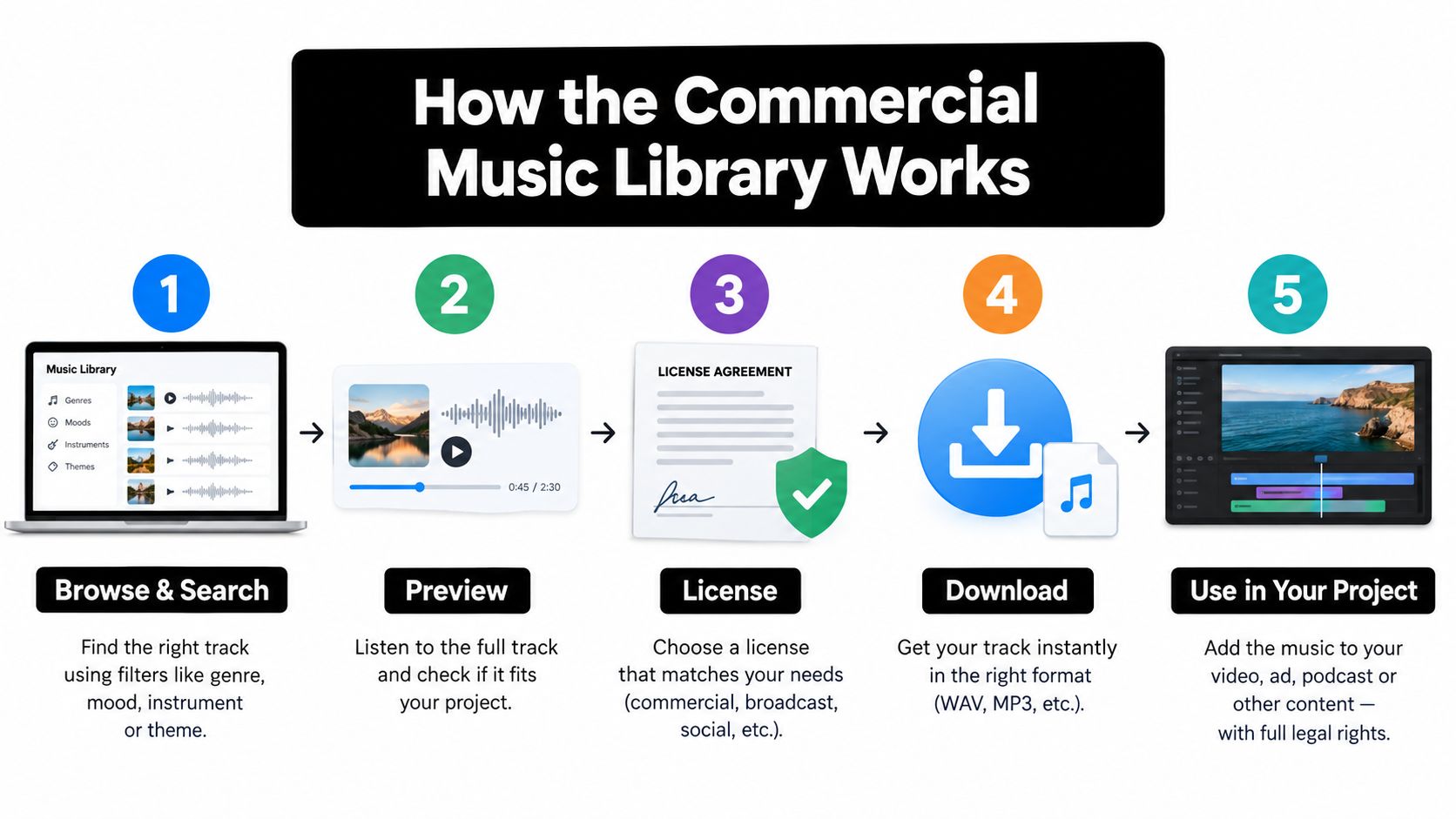
TikTok's Commercial Music Library, or CML, is the default starting point for business content that stays on TikTok. TikTok describes it as a pre-cleared catalog of approximately 1 million songs, with filters for region, placement, theme, genre, mood, and duration (TikTok's Commercial Music Library resource).
That scale doesn't mean every popular sound appears there. The library is a controlled commercial catalog, while the broader TikTok environment contains user uploads, edits, spoken overlays, remixes, and sounds that may be available to personal creators but aren't appropriate for brand promotion.
The practical selection process
Switching to a Business Account is only the beginning. When a business team creates a post or ad, it should use the sound selector and confirm that the selected track comes from the commercial catalog. Search by the campaign's creative requirements, not only by a trending label.
- Mood: Match the emotional role of the sound to the offer and audience.
- Genre: Narrow the field before evaluating individual tracks.
- Duration: Choose audio that supports the planned edit without forcing awkward loops.
- Placement: Check whether the track is available for the intended TikTok placement.
- Region: Confirm availability in every target market before production is locked.
Regional filtering is essential because music availability and licensing can vary by territory. A track selected for one market may not be available or cleared for another, so the campaign brief should record the target country or region alongside the sound choice.
TikTok describes the CML as usable for branded posts, video ads, and commercial interactions such as duets, reactions, and stitches. That makes it useful for both organic and paid activity within TikTok's environment, but it doesn't turn the track into a universal campaign license.
The CML is therefore necessary for many TikTok campaigns, but not sufficient for multi-channel distribution. If the same video will appear on Instagram, YouTube, a creator's paid post, a website, or a retail display, add those destinations to the rights review before editing begins. For a wider copyright refresher, use this practical guide to TikTok copyright and sound usage.
Where CML Clearance Stops Working
The most expensive misunderstanding in TikTok audio is treating CML access as blanket commercial clearance. It isn't. The CML helps clear selected uses inside TikTok under the applicable terms, but commercial use is not the same as usable everywhere.
That distinction becomes visible as soon as a campaign leaves its original placement. A brand may publish a compliant organic TikTok post, download the same file, and upload it to Instagram Reels. The visual asset is unchanged, but the music is now being used under a different platform and licensing environment.
Paid creator activity needs the same scrutiny. A creator's organic post may use one sound, while a brand's authorization, amplification, or paid distribution creates a separate commercial use question. Don't approve a creator's audio just because the initial post appears live.
Rights matrix for campaign planning
| Placement or Use Case | CML Coverage | Additional License Required |
|---|---|---|
| Organic branded post on TikTok using a CML track | Designed for this TikTok use, subject to applicable terms | Not automatically, if the post stays within the approved TikTok use |
| TikTok ad created and served through TikTok's ad workflow with a CML track | Designed for TikTok commercial advertising | Verify the final asset and any track-specific restrictions |
| Spark Ads or paid amplification from a creator post | Don't assume the organic clearance transfers to the paid use | Confirm paid-use eligibility and the audio permissions separately |
| Repost to Instagram Reels or YouTube Shorts | CML clearance doesn't automatically extend off TikTok | Obtain platform-appropriate rights or replace the audio |
| Paid creator content | Creator status doesn't establish brand permission | Confirm the audio source, paid use, term, and territory |
| Website, retail screen, event display, or other off-platform placement | Outside ordinary TikTok placement scope | Obtain separate synchronization and distribution rights where required |
The matrix should sit inside the campaign brief, not in a legal folder nobody opens. Mark each destination as approved, requires separate clearance, or not approved. That simple status prevents an editor from exporting a TikTok master and treating it as a universal master.
A CML track can be the right answer for TikTok and the wrong answer for the campaign as a whole.
If your distribution plan changes after approval, treat the change as a new clearance event. Cross-posting, paid amplification, and physical display are not administrative details. They change where the sound is heard and who is responsible for the use.
Three Legitimate Paths to Commercial Audio
Brands have three sound strategies that consistently make sense. The correct choice depends on distribution footprint, creative purpose, and how much control the brand wants over the asset.
Use the Commercial Music Library for TikTok-native work
Choose CML audio when the content is built for TikTok and will remain in TikTok's approved commercial lane. It's a practical fit for in-feed brand posts and TikTok advertising workflows where the track is selected from the appropriate catalog.
The trade-off is portability. CML should not be presented as a license for Instagram, YouTube, retail screens, or every form of creator amplification. Use it when TikTok is the destination, then label the asset accordingly.
Commission or record original audio
Original audio gives the brand the greatest ownership potential. A company can record a spoken hook, commission a sonic motif, or work with a producer to create music specifically for its content system.
This route is particularly strong for evergreen product education and recognizable brand identity. It also demands proper paperwork. Confirm who owns the master and composition, what contributors have assigned, and which channels the agreement covers. Calling a track “original” doesn't resolve rights if the recording contains someone else's protected material.
License music for the full distribution plan
A separate royalty-free or directly licensed track is the better option when the video will run across several platforms or appear in paid and offline placements. Services such as Artlist, Epidemic Sound, and Musicbed offer licensing models designed for broader commercial production, but the exact terms still need review.
The higher production value of a licensed track doesn't matter if the license excludes the campaign's territory, paid media, creator use, or duration. Before selecting music, ask:
- Where will the asset run?
- Will creators publish or authorize it?
- Will paid media extend beyond TikTok?
- Is the sound a one-off trend or a long-term brand asset?
- Does the license cover the intended term and territory?
For scheduling and production coordination, a tool such as iHatePosting's TikTok scheduler guide can support the publishing process, but scheduling doesn't prove audio clearance. Teams still need a rights record attached to each scheduled asset.
Sound can also become part of a broader audio branding strategy, especially when original audio is meant to recur across product launches and educational content. The decision rule is straightforward: CML for TikTok-native work, original audio for ownership, and separately licensed music for broader distribution.
A Repeatable Workflow for Sound Compliance
A sound review shouldn't depend on the memory of the person who found the trend. Build it into the same production flow used for scripts, captions, creator approvals, and media trafficking.
Identify the trend and separate the format
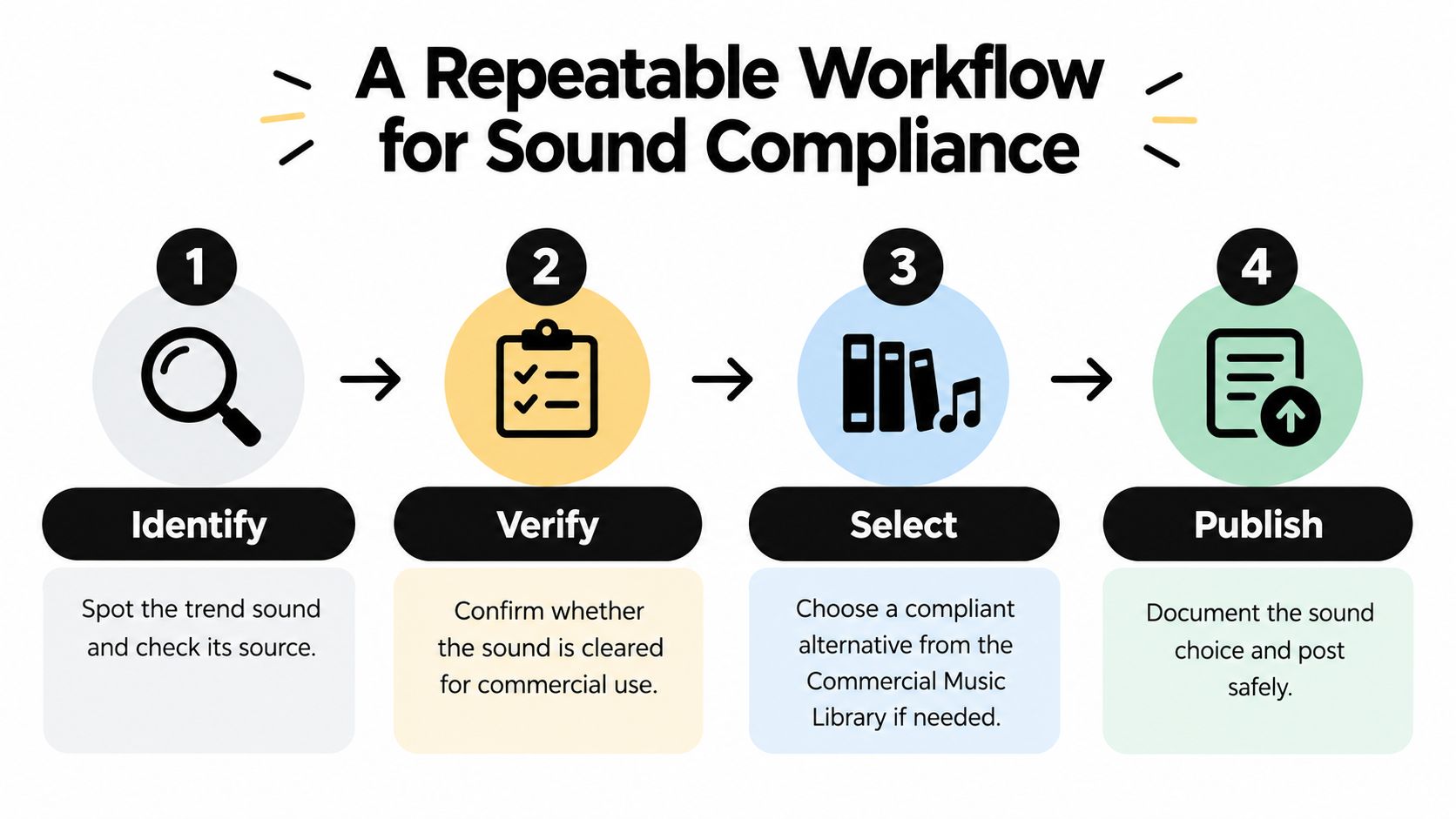
Start by recording the exact sound, its source, and the creative pattern attached to it. Then separate the format from the audio. The hook, shot order, caption structure, transition, and timing concept can often be adapted without copying the sound itself.
This distinction protects the creative idea from a rights problem. If the original track isn't cleared, the team can preserve the format and replace the audio instead of abandoning the entire concept.
Verify the actual clearance
Check the source against the distribution matrix. A track may be:
- In TikTok's CML for the intended region and placement.
- Covered by an external commercial music license.
- Owned or commissioned by the brand.
- Unverified and therefore unsuitable for publication.
Don't verify only the draft. Check the final exported file, because creators and editors sometimes replace audio during revisions. A CML track in the first cut doesn't help if the approved creator version contains a different sound.
Select a substitute without weakening the idea
When the preferred sound isn't cleared, search for a replacement with a similar mood, tempo, energy, or structural role. Preserve the creative function of the audio. A suspenseful build, satisfying reveal, or deadpan pause can survive a track change if the editor understands why the original sound worked.
Trend research becomes useful here, but recommendations should include a commercial-clearance constraint. Viral.new analyzes trending TikTok sounds and turns them into ready-to-shoot content ideas, so teams can use the format and creative direction as inputs while making the final audio decision through the rights workflow.
Publish with an audit trail
Before scheduling, log the track name or ID, source, license type, target region, approved channels, campaign dates, and person who verified it. Add the final asset version or a reference to it. If the sound changes, update the record instead of relying on a message thread.
The tracker doesn't need to be complicated. Its job is to let a producer, agency manager, or client answer what was used, where it was approved, and whether the published version matches the approved version.
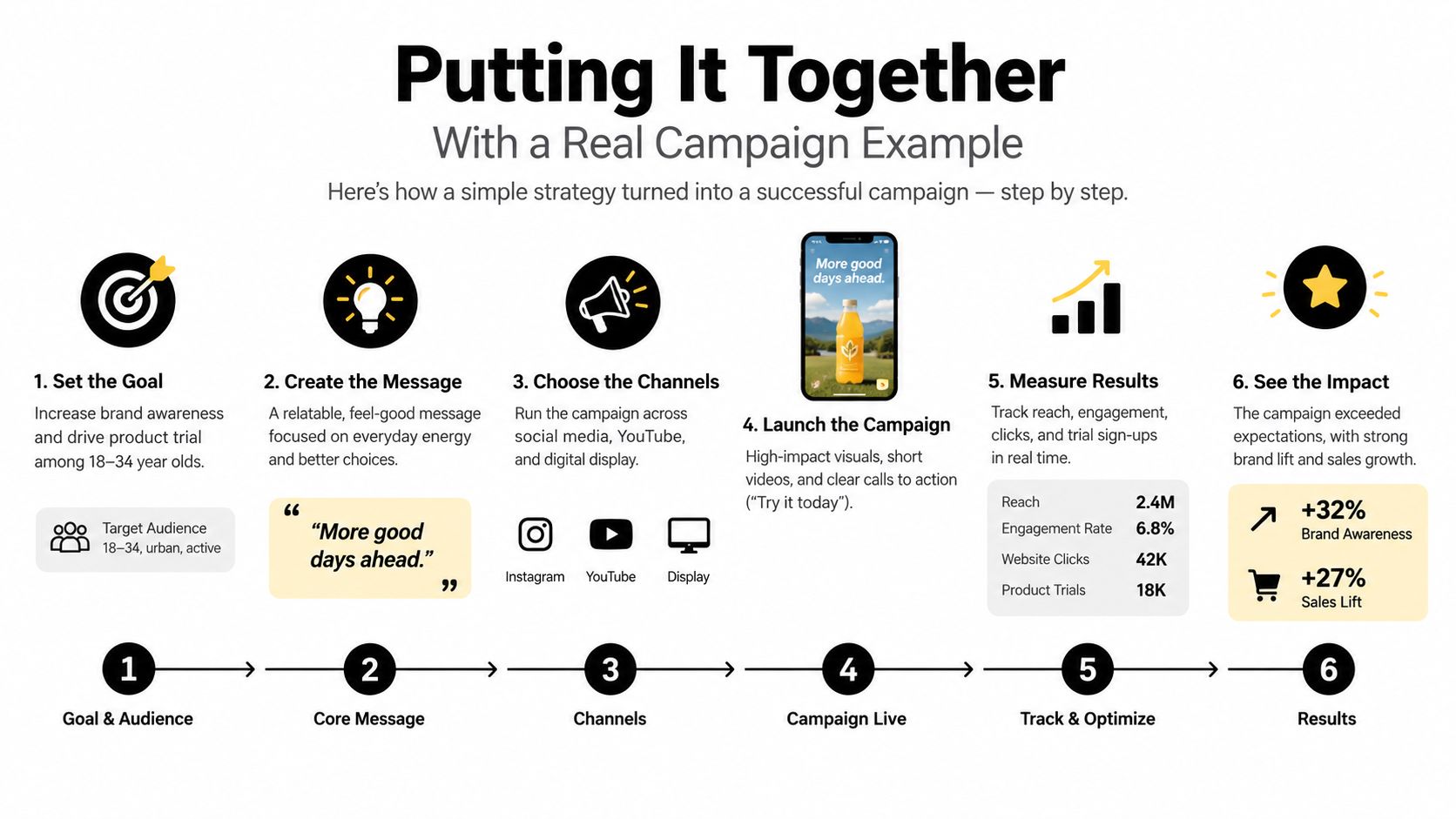
Putting It Together With a Real Campaign Example
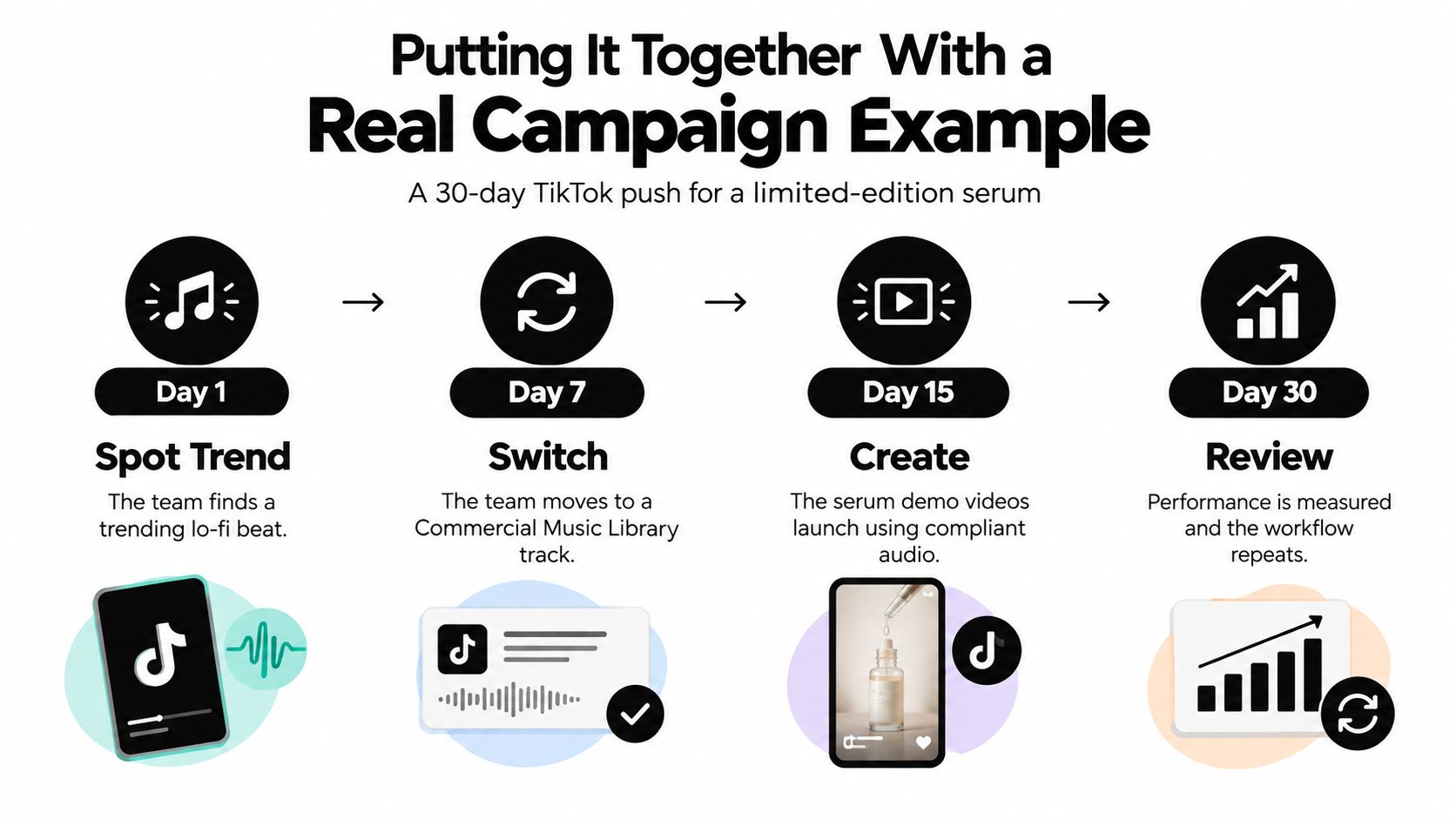
Consider a fictional direct-to-consumer skincare brand launching a limited-edition serum. The team wants a 30-day TikTok push, creator demonstrations, paid amplification, and Instagram Reels versions. Its first creative idea uses a trending lo-fi beat discovered in the For You feed.
The team doesn't reject the idea. It separates the beat from the format, preserving the close-up texture shots, timed serum application, and reveal at the musical transition. The producer searches the CML for a track with a similar pace and mood, then confirms that the replacement is available for the campaign's target region.
The campaign record
Before filming, the team creates one audio record for every approved master:
- Track reference: The CML track name or ID.
- Verification record: The date and account workflow used to confirm the selection.
- Intended placement: Organic TikTok, TikTok advertising, creator content, or another destination.
- Cross-post status: Whether Instagram or other platforms require a separate audio version.
- Campaign term: The period and markets approved for use.
- Final asset: The exported file that contains the verified track.
The creators receive the approved version and a clear instruction not to substitute audio during posting. If the brand plans paid amplification, the creator agreement and media plan identify that use before the post goes live. The Instagram version uses separately approved audio rather than carrying the TikTok track into a new platform.
Recovery when the sound is flagged
Suppose TikTok flags one creator version after publication. The team saves the post URL, records the exact audio, pauses any planned amplification, and compares the published file with the approved master. It contacts TikTok through the appropriate support route, then replaces the audio or republishes the compliant version according to the available platform options.
The team also updates the log with the incident, the original source, the replacement track, and the reason for the change. That record turns a frustrating exception into a production control. The next campaign brief can prohibit the unverified source before a creator ever receives the draft.
The important result in this fictional example isn't a promised reach figure. It's operational control. The brand keeps the trend's creative structure, avoids treating one platform's clearance as universal, and gives every participant a documented audio decision.
Your Commercial Sound Checklist and Final Takeaways
Sound governance belongs in the content brief. Use this checklist before any branded TikTok post leaves the editing queue:
- Confirm the source: Is the track in the CML, properly licensed elsewhere, or owned by the brand?
- Confirm the account context: Is the post coming from a business, creator, partner, or brand-affiliated profile?
- Confirm the purpose: Does the content promote a product, service, partnership, or commercial message?
- Confirm the placement: Is it organic TikTok content, a TikTok ad, creator content, or paid amplification?
- Confirm the region: Is the selected track available and approved for every target market?
- Confirm the final file: Does the published version contain the same audio as the approved version?
- Confirm cross-platform use: Will the video appear on Instagram, YouTube, a website, an event screen, or retail media?
- Confirm the log: Are the track reference, license status, channels, term, and verification record saved?
- Keep a fallback: Do you have an original or separately licensed alternative ready if the trend sound fails review?
Don't treat the CML as a universal “safe” button. Treat it as one lane in a broader rights matrix. TikTok's own research shows that sound can support attention, enjoyment, brand memory, connection, and sharing, while its commercial guidance makes clear that promotional use requires the right source and permissions (TikTok's commercial sound guidance). The creative upside is real, but so is the need for control.
Brands that document sound choices move faster because producers aren't forced to guess. They can reuse approved formats, brief creators clearly, adapt trends without copying uncleared audio, and build original sound into brand identity. Sound is now a governed brand asset, alongside logos, product photography, and campaign copy.
Viral.new turns current TikTok trends and sounds into ready-to-shoot content ideas built for a business or niche, giving your team a faster way to identify formats before applying the correct clearance check. Visit Viral.new to keep your content pipeline active while your sound decisions stay deliberate.
