
Short-form video has become a primary way people learn what a product does. A 2026 marketing compilation reports that 63% of consumers prefer short videos when learning about a product or service, while 96% have watched an explainer video for that purpose (Kapwing's short-form video statistics). That doesn't mean every product video should use the same script.
A problem-solution demo captures existing demand. An unboxing sells the receiving experience. A testimonial reduces risk, a niche lifestyle clip builds identity, and a limited-time drop gives ready-to-buy viewers a reason to act now. The format has to match the job.
Choose the format before you press record. Start with four decisions: what you sell, where the viewer is in the buying journey, what action you want next, and how quickly you can produce the clip. The ideas below are designed for TikTok creators, e-commerce teams, DTC brands, and local businesses that need footage they can shoot without a studio.
Adapt the examples to your offer rather than copying them mechanically. If you need a daily stream of trend-aligned prompts, Viral.new is an optional source of product-focused ideas. If you sell property rather than physical goods, the same principle applies to making a converting real estate Reel: lead with the buyer's problem, show the proof, and give the viewer a clear next step.
1. The Problem-Solution Hook
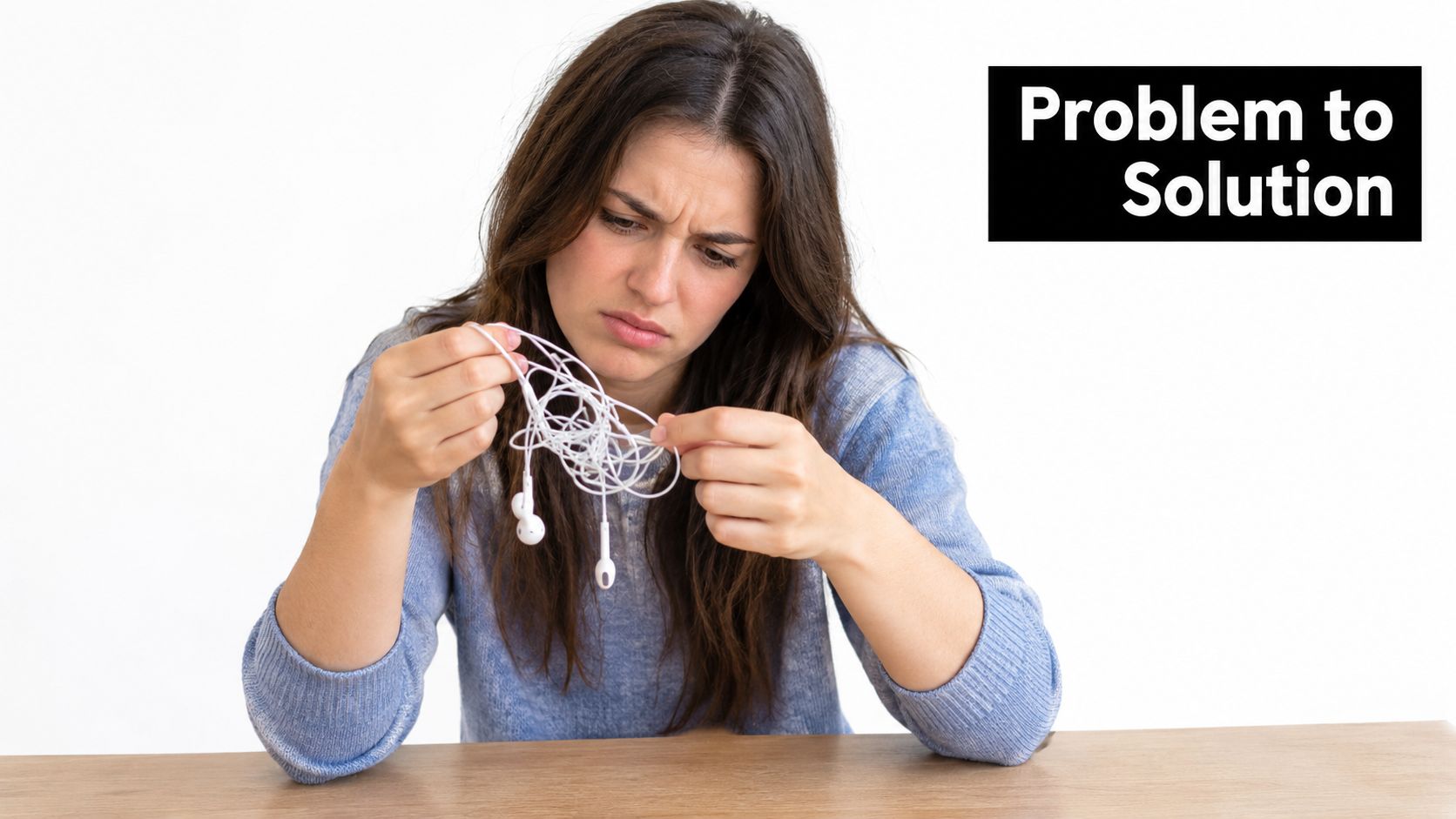
Open with the frustration your buyer already recognizes. A tangled pair of headphones, a crowded calendar, a leaking water bottle, or a skincare problem can stop the scroll faster than a polished product beauty shot because the viewer immediately understands the situation.
The structure is simple. Show the problem first, introduce the product as the answer, then demonstrate the result with a direct action. Keep the opening visually specific, not abstract. “Struggling with productivity?” is weaker than a screen filled with overdue tasks while an alarm sounds.
A practical shot structure
- Problem: Show the failure, inconvenience, or repeated annoyance in the first moments.
- Recognition: Add a concise text overlay that names the pain in the buyer's language.
- Solution: Put the product into use immediately. Don't hold it beside the problem and expect the audience to imagine the benefit.
- Action: Ask viewers to watch the full demo, comment with their version of the problem, follow for more tips, or visit the product page.
A tangled-hair product can begin with a close-up of knots, cut to the application, and end on a clean result. A productivity app can show a chaotic task list, then reveal the workflow that sorts it. Liquid Death has used a clear positioning contrast around bottled water and plastic packaging, which gives the product a recognizable point of view without requiring a complicated setup.
Practical rule: Spend more time making the problem recognizable than explaining the product. A viewer who doesn't feel the pain won't care about the solution.
The trade-off is that aggressive problem framing can make a product seem like a rescue device for an issue it only partly addresses. Keep the promise honest, show the product working, and test different pain points within the same niche rather than changing the entire format.
2. Behind-the-Scenes Product Creation
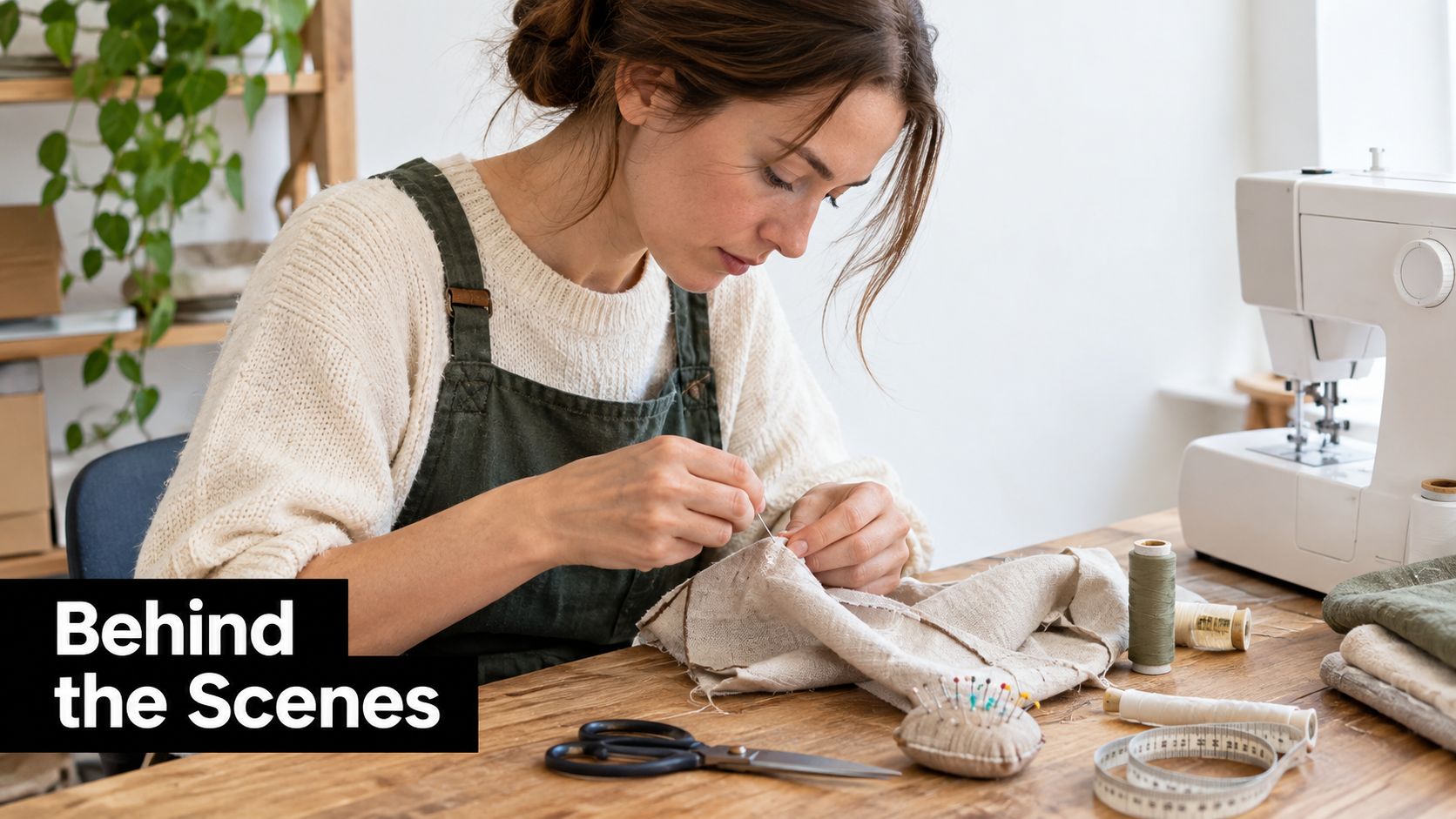
A product becomes easier to trust when viewers can see the people, materials, and decisions behind it. Film the cutting table, roasting process, packaging bench, quality check, or sourcing conversation. The footage can look informal, but it still needs a narrative.
Start with a question the customer might ask: “How is this made?” or “Why does this packaging cost more?” Then show the answer through a sequence of real actions. A handmade clothing brand might film fabric selection, stitching, inspection, and packing. A local food business could show ingredient preparation and the final handoff to a customer.
Show the work, including the imperfect parts
Captions should explain unfamiliar steps without turning the clip into a corporate presentation. Mention a material choice, a design constraint, or a small production problem that the team had to solve. Viewers learn more from seeing a label corrected or a prototype rejected than from watching only flawless footage.
A recurring series gives this format more value. “How We Make It” can become a weekly production habit, with each episode focused on one component or decision. Behind-the-scenes content guidance from Viral.new can help generate additional angles when the same process starts to feel repetitive.
Use natural sound when it adds texture, such as sewing, pouring, folding, or sealing. Trending audio can widen distribution, but it shouldn't cover the explanation or make the process feel staged. This format is strongest for handmade goods, ethical brands, food, beauty, and products with a meaningful origin story. It's less useful for a commodity product unless the manufacturing or sourcing process genuinely changes the buyer's decision.
3. Before-and-After Transformations
Contrast communicates value quickly. Show the messy desk beside the organized workspace, dull hair beside styled hair, or dirty floor beside the cleaned surface. The audience doesn't need a long explanation to understand the change, but they do need enough context to judge whether the result is credible.
Keep the camera position, lighting, and framing consistent. A locked tripod shot makes the transformation easier to compare, while a dramatic change in lighting can make a modest result look exaggerated. Add relevant timing information when the result depends on repeated use, and distinguish an immediate effect from a longer-term outcome.
Make the proof believable
Beauty, home, fitness, and productivity products all use this format, but each needs a different proof standard. A cleaning product can show the same surface before and after one application. A hair treatment may need a routine and a stated period of use. A productivity tool can show the workflow before and after setup, then demonstrate the saved steps.
- Use real subjects: Customer footage often feels more persuasive than a brand model with a perfect setup.
- Show the process: Include enough application or usage footage to connect the product with the outcome.
- Add a reaction: A customer's first response can make the result feel human rather than staged.
- Avoid deceptive framing: Don't change camera angle, crop, or conditions in a way that hides the original state.
The format also works for services. A real estate creator could show a cluttered room before staging and the same room after preparation, then direct viewers to a viewing or consultation. For editing ideas and transition techniques, this guide to editing transformations provides a useful reference.

A transformation can attract attention without closing the sale. Add one practical detail, such as who the product suits, what it replaces, or what the viewer should do next, so the clip supports evaluation rather than ending at the reveal.
4. Trend-Jacking Product Demos
A trending sound or format can give a product a familiar creative wrapper, but the trend should serve the demonstration. Use the audio for the setup, reaction, reveal, or punchline, then make the product benefit visible. If the viewer can remove the product and the video still works exactly the same way, the integration is probably too weak.
A makeup brand might use a transition format to show a finished look. A coffee shop could adapt a reaction trend around a seasonal drink. A local retailer might use a popular comedic structure to show the difference between arriving unprepared and leaving with the right item.
Keep the trend and the product in balance
Film several versions while the format is still relevant. Change one element at a time, such as the opening text, reveal moment, product angle, or closing CTA. This gives you a better read on which creative choice helped rather than producing unrelated clips that are difficult to compare.
Viral.new can help identify trend formats that fit a specific category, but creators still need to check whether the trend matches their audience and brand voice. A trend that attracts views from people with no buying intent may create activity without useful product discovery.
A trend is packaging, not proof. The product still has to solve a recognizable problem on camera.
Use captions because viewers often encounter short-form content without relying on audio. Keep the product visible before the climactic reveal when the item needs context, and use a direct caption rather than stuffing every available hashtag into the post. Trend-led videos work best as timely additions to a content system, not as the only type of product content you publish.
5. Customer Testimonial and Use-Case Series
A testimonial becomes stronger when it answers, “How does someone like me use this?” Ask customers to film in the environment where the product matters. A runner can show a hydration product before training, a small business owner can demonstrate software during a real workday, and a parent can explain how a household item fits into a morning routine.
Avoid giving customers a paragraph to memorize. Ask open questions instead: What problem were you trying to solve? What changed in your routine? What surprised you? What would you tell someone considering it? Edit the natural answers into a concise story, while preserving the customer's own voice.
Build a library, not a single endorsement
A series lets you cover different customer types, use cases, and objections. One video can focus on setup, another on durability, another on portability, and another on a result after regular use. Use the customer's name, location, and product where permission allows, but don't add details that make the clip feel like a scripted infomercial.
The raw recording can be informal, but audio must remain understandable. Film near a window or use simple lighting, then capture product-in-use footage to break up talking-head sections. Viral.new's customer testimonial video resource offers further prompts for building this kind of series.
The evidence standard matters. Don't ask customers to claim results they haven't experienced, and don't turn an incentive into a reason to exaggerate. Senior-level media expertise on customer testimonial videos can help teams think through the production and interview side of the format.
This concept is strongest for consideration-stage viewers who already know the category but need reassurance. It's less effective when the audience doesn't yet understand what the product does. Pair testimonials with demos so the customer's story has visible proof behind it.
6. Quick-Tip and Educational Hack Series
Teach one useful action that happens to involve your product. A hair tool brand can show a technique for a particular hair type. A productivity app can demonstrate a shortcut. An eyewear retailer can explain lens care. The viewer should receive a practical answer even before they decide whether to buy.
Open with the problem, then name the tip in on-screen text. Show the action close up, keep the product visible without making it the entire subject, and end with a “save this” or “follow for the next tip” prompt. The educational framing makes the video useful to people who aren't ready to purchase, which can expand discovery beyond direct product searches.
Turn one feature into a content pillar
A single product can support many lessons if you change the context. A kitchen tool might have tips for speed, storage, cleaning, and meal preparation. A software product can support shortcuts for planning, reporting, collaboration, and repeat tasks. Keep each clip focused on one result rather than listing every feature.
Short-form video is particularly suited to this format. One 2026 industry survey found that videos under 60 seconds had the highest ROI among video formats, with 21 to 30 seconds the preferred length for 42% of marketers and 31 to 60 seconds preferred by 32% (HubSpot's video marketing report). Treat those figures as a planning reference, not a rigid rule. A complicated demonstration may need more time, while a single shortcut may work in a much shorter clip.
Repurpose strong tips into a playlist or Shorts series, but rewrite the opening for each platform. The product should support the lesson, not interrupt it with a sales pitch.
7. Comparison and Competitive Positioning
Comparison videos help buyers decide between your product, a competitor, or an outdated alternative. They work because they make the decision criteria visible. Instead of saying “ours is better,” compare two options on a point the customer actually cares about, such as setup time, material, maintenance, portability, or total use case.
The comparison can be factual, humorous, or lifestyle-led. A razor brand might contrast a complicated routine with a simpler one. A sustainable shoe company might compare material choices. A mattress brand could show the difference between shopping through a confusing showroom process and using a guided online experience.
Compare what you can defend
Use side-by-side shots, labels, and a consistent test. If you compare cleaning performance, use the same surface and conditions. If you compare software workflows, show the same task completed in both systems. Transparent criteria create more trust than vague claims about quality.
- Choose relevant criteria: Focus on the buyer's decision, not a feature your team happens to like.
- Use evidence: Show the material, interface, mechanism, or process on camera.
- Avoid cheap shots: Humor can keep the clip watchable, but personal attacks and unsupported claims can damage credibility.
- Explain the trade-off: Your product may cost more, require setup, or prioritize durability over speed. Say why that difference matters.
You don't need to name a competitor. An old alternative, anonymous packaging, or a generic workflow can establish the contrast while reducing unnecessary conflict. If you do identify another product, fact-check every statement and keep the comparison current. This format is most useful for consideration-stage buyers who are actively weighing options.
8. Limited-Time Offer and Urgency-Driven Drops
Urgency works when the deadline or inventory limit is real. Use this format for a seasonal release, a limited product run, a flash promotion, or a restock that customers have been waiting for. Show the item, state what is changing, and make the next step unmistakable.
A drop can unfold as a short sequence. Begin with a teaser that reveals the color, flavor, design, or collaboration. Follow with a product detail and an explanation of who it suits. Publish the launch announcement with the exact availability information, then follow up with customer reactions, remaining stock updates, or a restock notice when accurate.
Use scarcity without exhausting trust
Repeated fake countdowns train viewers to ignore your urgency claims. A genuine limited run can create excitement, but a permanent “last chance” message makes the brand feel manipulative. Keep the offer details on screen long enough to read, and make sure the landing page, TikTok Shop listing, or checkout flow matches the video.
You can build a countdown series, but each post needs a distinct reason to exist. One clip can show the product detail, another can answer a shipping question, and the launch clip can focus on the purchase action. Don't rely on a trending sound to communicate the deadline. Put the date, time, and availability in captions.
This format is designed for immediate action, not broad education. If a viewer needs to understand the product category first, publish a demo or comparison before the drop. After launch, show what happened truthfully. A restock announcement can work well when customers genuinely missed the first release, while a forced “sold out” performance can weaken future credibility.
9. Reaction and Unboxing Experience Content
The unboxing is the first physical interaction between the buyer and the brand. Film the opening, packaging texture, inserts, product reveal, and first use in a way that preserves the sequence. A premium beauty product, giftable item, subscription box, or carefully designed accessory can all benefit from this approach.
A strong unboxing doesn't only show what arrived. It shows how the recipient feels and what they do next. Capture the pause before opening, the sound of seals and tissue paper, the close-up of craftsmanship, and the moment the product moves into use. Natural lighting is often enough if the product remains clear.
Sell the receiving experience honestly
Ask customers not to rehearse their reaction. A real pause, question, or small disappointment can make the footage more believable than constant excitement. If the packaging uses less material or includes a specific disposal instruction, explain it rather than presenting sustainability as a vague aesthetic.
This unboxing video guide from Viral.new can help generate variations for different recipients and product categories. Try a customer unboxing, a creator unboxing, a gift reaction, and a first-use follow-up, but don't repeat the same reveal without adding a new perspective.
The format is less suitable for products whose value appears only after prolonged use. In that case, combine the unboxing with a later testimonial or test video. Packaging can attract attention, but it shouldn't become a substitute for demonstrating product performance.
10. Niche Community and Lifestyle Integration
People often buy products as part of a routine, hobby, identity, or set of values. Show the product inside that world instead of isolating it on a white background. A running brand can film a pre-run setup, a gaming accessory brand can join a streamer's real session, and a sustainable fashion label can show garment care within a conscious-consumption routine.
The strongest lifestyle videos understand the community before promoting to it. Learn the language, priorities, objections, and rituals. A product that helps a trail runner carry less, a home barista control a morning routine, or a local cyclist repair a bike should appear as a useful participant in that activity, not as an interruption.
Make the community the subject
Build several versions for distinct audiences rather than forcing one generic lifestyle onto everyone. The same backpack could appear in a commuter routine, a weekend hike, and a student's campus day, with a different benefit emphasized in each. Niche creators can add credibility, but they need room to speak naturally and use the product in a real context.
This format is usually better for discovery and brand affinity than immediate conversion. The viewer may not click on the first exposure, but the product becomes associated with a desired activity or identity. Add a specific next step when the product is relevant, such as “see the trail setup,” “shop the kit,” or “save this packing routine.”
Avoid borrowing community symbols without participating in the community. A polished clip that uses the right hashtags but shows no understanding of the activity can feel opportunistic. Let the product enable the story, and make the audience's values more visible than the brand's logo.
10 Product Video Ideas Comparison
| Format | 🔄 Implementation complexity | ⚡ Resources & Speed | 📊 Expected outcomes (⭐ effectiveness) | Ideal use cases | 💡 Key advantages |
|---|---|---|---|---|---|
| The Problem-Solution Hook | Low 🔄, short, repeatable 7–10s structure | Low ⚡, minimal props, quick edits | High 📊, strong engagement & conversions ⭐⭐⭐ | DTC e‑commerce, SaaS demos, local solutions | Clear value proof, pattern interrupt; easy to scale 💡 |
| Behind-the-Scenes Product Creation | Medium–High 🔄, needs access + storytelling | Medium ⚡, on-site shoots, episodic cadence | High (brand trust) 📊, long-term loyalty ⭐⭐⭐ | Craft brands, manufacturing, sustainability-focused | Humanizes brand, builds credibility and emotional investment 💡 |
| Before-and-After Transformations | Medium 🔄, requires real results and editing | Medium ⚡, time for results + polished transitions | Very High 📊, proof-driven conversions, viral ⭐⭐⭐⭐ | Beauty, fitness, home goods, productivity tools | Immediate visual proof; strong scroll-stopper and shareability 💡 |
| Trend-Jacking Product Demos | Medium 🔄, must align with fast-moving trends | High ⚡, rapid turnaround (48–72 hrs), low polish | High reach, volatile 📊, algorithm boost ⭐⭐⭐ | Fast-moving consumer brands, DTC, creators | Native-feeling reach and rapid virality; timing-critical 💡 |
| Customer Testimonial & Use-Case Series | Medium 🔄, recruit customers, coordinate shoots | Medium ⚡, scheduling + editing overhead | High (social proof) 📊, better conversion (2–3x) ⭐⭐⭐ | Services, SaaS, products needing proof-of-use | Builds trust, diverse audience resonance, community signals 💡 |
| Quick-Tip & Educational Hack Series | Low–Medium 🔄, repeatable teaching format | Low ⚡, low-cost, highly scalable | Strong organic growth 📊, follower & share growth ⭐⭐ | Tech, beauty, home, productivity categories | Positions brand as authority; highly shareable and evergreen 💡 |
| Comparison & Competitive Positioning | Medium 🔄, research-heavy, careful framing | Low–Medium ⚡, simple production, fact-checking | High consideration impact 📊, converts unsure buyers ⭐⭐⭐ | Market challengers, DTC brands, value/premium positioning | Clear differentiation and objection handling; legal risk if sloppy 💡 |
| Limited-Time Offer & Urgency Drops | Medium 🔄, cross-team coordination required | High ⚡, fast campaign tempo, inventory dependent | Immediate spike 📊, concentrated revenue window ⭐⭐⭐ | Fashion drops, seasonal launches, limited editions | Drives FOMO and rapid sales; must honor real scarcity 💡 |
| Reaction & Unboxing Experience Content | Low 🔄, simple setup, authentic capture | Low ⚡, needs product units and creator access | High emotional engagement 📊, impulse consideration ⭐⭐ | Premium goods, subscriptions, gifts, beauty | Showcases packaging and first impressions; strongly shareable 💡 |
| Niche Community & Lifestyle Integration | High 🔄, deep community knowledge required | Medium ⚡, creator partnerships, tailored content | High conversion in niche 📊, loyal superfans ⭐⭐⭐ | Outdoor, gaming, fitness, sustainable/lifestyle niches | Builds belonging and advocates; lower saturation but slower scale 💡 |
Turn One Product Into a Repeatable TikTok System
Don't try to publish all ten formats at once. Select two or three concepts that match the immediate business goal. A new product may need a problem-solution demo and a comparison. A product with an established audience may need testimonials and educational hacks. A seasonal release may need lifestyle content before the launch, then urgency-driven posts when buying becomes the priority.
Change one variable at a time. Keep the core format stable while testing the hook, proof, creator, sound, or CTA. For example, film the same product demonstration with a pain-based opening, a question-based opening, and a direct visual reveal. If you change the hook, filming style, soundtrack, edit, and offer simultaneously, you won't know which decision affected the response.
Short-form video consumption supports a concise, proof-led approach. One 2026 summary reports that 58% of time spent on social media worldwide goes to short-form video and that views across TikTok, Reels, and Shorts grew 36% year over year (Kapwing's video marketing statistics). Those figures don't guarantee that any individual post will work. They do explain why a repeatable library of demos, comparisons, testimonials, and useful tips is more valuable than waiting for one perfect concept.
Balance evergreen and timely formats. Evergreen videos can include:
- Demonstrations: Show the product solving a specific problem.
- Educational hacks: Teach a useful action related to the category.
- Testimonials: Let customers explain how the product fits their lives.
- Lifestyle integrations: Place the product inside a meaningful routine or community.
Add trend-led and urgency-based posts when they serve a clear purpose. A trend can give a familiar format to a useful demo. A drop can turn existing interest into an immediate purchase. Neither should replace the foundational content that explains what the product does and why someone should trust it.
A practical publishing workflow is straightforward. Choose the audience problem, write the first two seconds, film the proof, add one clear action, and review the response before repeating the strongest angle. If the opening earns attention but the demonstration loses viewers, improve the proof. If the video holds attention but produces no product interest, clarify the offer or CTA. Diagnose the weak step instead of discarding the entire idea.
Use comments as research. Questions about size, setup, durability, ingredients, compatibility, delivery, or alternatives can become the next batch of videos. This turns audience friction into a content queue and keeps your product video ideas connected to real buying decisions.
Viral.new is one optional way to maintain a steady pipeline of niche-specific, trend-aligned prompts through daily delivery. Use it to reduce brainstorming time, then apply your own product knowledge, customer evidence, and production judgment before filming. The tool can suggest a direction, but your footage still has to make the benefit visible and the claim credible.
Viral.new delivers fresh, trend-aligned TikTok prompts to your inbox every morning, matched to your business or offer and built around ready-to-shoot hooks, formats, and angles. If you want a steadier pipeline of product video ideas for demos, testimonials, unboxings, and conversion-focused tests, visit Viral.new and describe what you sell.
